Cookies and Gratitude

I really love Chips Ahoy chocolate chip cookies.

There are certainly better chocolate chip cookies—warm, soft and chewy, made with artisan chocolate, browned butter and fancy, flaked salt. But I really love these cookies. What separates them from all the others certainly isn’t taste. It’s the gratitude I feel when I eat one.

Here’s why.


In the Summer of 1970, Dad was transferred to the Navy base on the tiny Aleutian island of Adak, Alaska. To a seven-year-old kid, Adak felt so far from our little ranch house on Madison Avenue in Pensacola, Florida. The island sat halfway between Anchorage and Russia. I had lived in San Diego and Panama before Florida, so sunshine and warmth were all I really knew. Alaska was going to be different.

Unfortunately, we couldn’t travel together. Dad had to leave ahead of us and it would be several months before we could join him.

Before he left, he knelt down in front of me.

“Sonny, I need you to be the man of the house. Take good care of your mother, Travis, and your sisters. We’ll all be back together in no time at all.”

I was the oldest of four and Mom was expecting number five. My dad meant encouragement, not burden—but to a seven-year-old, it felt like both. I took my assignment seriously. I had a big job to do.


Months later, on a cold, rainy, blustery October day—typical Adak weather—we stepped off a Reeves Aleutian Airways DC-6 down the stairs onto the tarmac at Adak Naval Air Station. Mom and my siblings ran ahead, straight into Dad’s arms.

I stood at the bottom of the stairs, transfixed at the reunion unfolding before me . . . wondering.

Did I do okay?

Was I the man Dad asked me to be?

Tears welled up. I guess it really didn’t matter.  We were together again and that was the important thing. I ran ahead to join the celebration.

In no time, we were crammed into a ‘63 Rambler station wagon on our way to our new home—a small duplex on Salmon Circle.

I ran inside to check out our new home and there it was!  A box of Chips Ahoy cookies on the kitchen counter. And shortly thereafter, with cookies and cold glasses of milk, we celebrated our family reunited again.


Sometimes memories of family, friends and gratitude are not as grand, quintessential, and Norman Rockwellian as a perfectly staged Thanksgiving table with a bronzed, twenty-pound bird. Sometimes (most times) they are quieter, understated, and sneak up on you—even as a simple box of cookies. These many years later, when I eat one of those bone-dry Chips Ahoy cookies, I’m reminded how gratitude often hides in the ordinary—waiting patiently to be remembered and treasured.

I love Chips Ahoy cookies to this day

Reminiscences of an Old Aviator

I was in a hurry. Five new admissions and a few consults the night before and just a few hours to see them all. As an attending physician on the family medicine residency inpatient team, I was supposed to meet with my team at nine for morning rounds.

One of the new consults on my list was from the orthopedic service.

“Alzheimer’s dementia, Right hip fracture. Assist with medical management of hypertension, diabetes, and dementia.”

This should be quick.” I thought.  I grabbed the patient’s chart to review. Quickly thumbing through it—ortho’s notes were cryptic and sketchy.  Not much information. The nurses’ notes were more informative . . .

“93-year-old male with severe Alzheimer’s dementia. Non-communicative.”

I flipped to the back of the chart and noted a photocopy of the patient’s retired military ID card.

U.S. Air Force, Colonel, Retired

I went to see the patient. Entering his room, his 60-something-year-old son was at the bedside.

“Good morning, Colonel!” I called out from the doorway.

The old man weakly turned his head toward me and a smile came to his eyes and eventually across his lips.

He weakly responded in kind, acknowledging my rank (I was wearing my Air Force uniform). “Good morning, Colonel.” The visual cue of my uniform and me acknowledging his rank seemed to have penetrated the fog of dementia. For a brief moment you could see a spark in his eyes.

I asked a few doctor-type questions and the old man had no complaints. In fact, he didn’t respond at all. Just a blank stare. His son filled me in on the details of his medical conditions and recent fall.

I continued . . .

“So, Colonel, I assume you’re a World War 2 veteran. Can you tell me a little about your military service?”

He was slow and halting at first, fishing for words.

“Eighth Bomber Command”

“Pilot, B-24 Liberator”

“25 missions.”

The old man’s tempo, clarity and emotion increased and he began to tell his story. The descriptions were heartfelt and graphic. Bone-chilling temperatures. Lock-step flight formations. Flak so thick it was, as he described it, “almost like you could walk from plane to plane using the flak bursts as stepping stones.” And then there were the bravery, fear,  and carnage. Crew members—his friends–injured, bleeding, crying, dying. Buddies who would be forever young, having paid the supreme sacrifice.

And the old man cried as if it all happened yesterday.

And then his son cried.

I cried too.

After 45 minutes of listening to the old man reminisce, I reluctantly excused myself to see my next patient. Now I was really running late. There was no way I’d be able to see everyone by 9:00 AM. Chasing me down the hall, the son caught up with me and grabbed me by the arm. I turned around.

“Thank you so much, doctor!” said the son, tearfully shaking my hand.

“For what?” I responded. ” I should be thanking you and your father. It was such an honor to hear your dad’s story!”

“No doctor, you don’t understand. You see, Dad never told us. His service in World War 2 was a secret he mostly kept from all of us. What happened this morning was such a gift to me,–for my whole family. I thought we had lost those memories forever.”

With great expectation, I went back for part 2 of the old colonel’s story the next morning but he had nothing more to say. Non-communicative. Back to baseline. He went back to the nursing home later that afternoon.

Everyone has a special story. I’m convinced of that. And those stories have the potential to enrich us in so many ways.

But we have to ask.

And we have to take time to listen.

A Chainsaw Misdemeanor

Fall of 1988

We had just moved into a rental house in Hallsville, Missouri, just a few miles outside of Columbia. The house, a tiny, 2 bedroom ranch, wasn’t much to look at but at $250/month rent, it was within our budget. The house was just barely passable until the cold chill of early November set in. The house just would not heat. So I began to investigate. I soon discovered the duct system in the house was non-existent. The dilapidated furnace simply pushed tepid air into the crawl space of the house, allowing the dankness to ooze up through the vents in the floor. No duct-work at all! I pulled up a floor vent and stared straight down onto the dirt of the crawl space! So, I called my landlord—a slum lord for sure. His answer? He installed a potbelly wood stove in the living room. Well, we were cold and the quickest way to a warm house was not to move. So, I scraped together a hundred bucks and bought a used chainsaw.

The next weekend, Jesse and I were scouting the roads of rural Boone County looking for fallen timber. A downed tree here. A downed tree there. It was slow going until . . . jackpot!!

There, about 50 yards off of Mexico Gravel Road in a densely wooded area, was a big pile of logs and cut trees, stacked every which way, seemingly haphazardly–an eyesore, in my opinion. In an hour, we had a truck full of firewood leaving nothing but a few branches and sawdust. Later that evening we were all warm and toasty sitting by the stove feeling secure in the knowledge we were not going to freeze that winter and that we had made rural Boone County a little prettier in the process.

The next week, the Columbia Tribune police blotter had the following report:

The Columbia Audubon Society reported the vandalism and destruction of a bird blind off of Mexico Gravel Road. A $100 reward is offered for information leading to the arrest of the vandals.

I can only hope the statute of limitations has passed.

Of Prostates and Breasts

October is National Breast Cancer Awareness Month. Be aware. Get your mammogram. And then consider this. . .

A few years ago I had a 50-something aged couple in my clinic. They were there for him this time and I was talking to the gentleman about recommended preventive screening. We got to the topic of prostate cancer screening. I explained to him the prostate specific antigen (PSA) test and the infamous digital rectal exam were the extent of the screening and, unfortunately, those tests had not proven to be very effective at prolonging life or reducing suffering. In fact, prostate cancer screening is so ineffective, many experts recommend against screening at all. In short, it was a controversial screening at best.

The gentleman became irate.

“It just isn’t fair, doc!!” the man exclaimed.

“What isn’t fair?” I asked.

The man continued. “Think about it! Just last weekend you had a gazillion people running through the streets of St. Louis in the Susan Komen Race for the Cure to help with breast cancer. T-shirts and bumper stickers everywhere with ‘Save the Tatas!’ Pink ribbons galore! And what does prostate cancer get? NOTHING!!”

The wife turned to her forlorned husband, placed her hand on his shoulder and in a thick Texas drawl offered a bit of perspective. “Now, now dear. We ladies love our breasts. And we know you men love our breasts. But no one loves the prostate, stuck up there next to the rectum. Seriously, dear! What did you expect?”

The man reflected for a second or two and turned to me with a sheepish grin. “You know doc, she does have a point.”

The Pink Dress

May 1997

The families queued up in the early morning hours, lining up at the front door of the little church in the Caribbean coastal town of Puerto Cabezas, Nicaragua. The line soon stretched around the side of the church and down the hot, dusty lane, out to the main road. They were there to see the American doctors.

Most of the complaints were typical to any primary care clinic . . .

“Tengo gripe, Señor.”  (“I have the flu, Sir”)

“Me duele aquí.”  (“It hurts here.” [pointing to the affected body part])

“¿Podría tomar algunas vitaminas?” (“Could I have some vitamins?”)

And then a young mother presented with her two-year-old daughter in her arms. The little girl was striking in contrast. Her pretty pink dress stood out starkly against the drab of the browns and tans of a hot, dusty Nicaragua.

“Mi hija está enferma,” said the young mother.  (“My daughter is sick.”)

As with most of the children, she wasn’t very ill, just a simple cold. Reassurance, medication for worms, some children’s vitamins, and the little girl and her mother left.

Several patients later, another young mother walked in, daughter in arms, and that little girl was also dressed in a pretty pink dress. Later that morning, another mother with her daughter dressed in a pink dress came to the top of the queue. And throughout the day, mothers with daughters in arms presented to my makeshift clinic, each little girl donning a pink dress. Six or seven girls in all.

It wasn’t until late-afternoon, I discovered the reason for this Nicaraguan toddler fashion trend. It wasn’t a pink dress fashion trend at all, but rather little girls coming to the doctor, each dressed in the best their mothers could provide—each little girl donning the same pink dress. The mother and little girl would leave the clinic, walk down the line, and pass off the dress to the next little girl in the queue.

The quiet, simple dignity of these young mothers was humbling.

The Little Hand Beneath a Blue Drape

It invaded my sleep again a few nights ago, as it has dozens of times over the past twenty-five years. Maybe this time it was triggered by recent events in Las Vegas. Maybe it was the vicarious pain of friends who have suffered great loss. I don’t know.

This time it wasn’t the full dream. Just a single image: a small hand protruding from beneath a blue drape—a mental screenshot, a reminder of a long-ago tragedy.

I wouldn’t call it PTSD. The image doesn’t visit often. There are no tears. No true nightmares. Just a brief dream, and then I’m awake, replaying the moment.

It was a terrible tragedy. I’ve witnessed others just as awful—and far more graphic—in emergency rooms, on highways, and in Iraq over the past twenty-five years. But those do not return like this one does.

Why?

Maybe it was my naïve vulnerability at the time. Maybe it’s because I could identify with it more on a personal level. I’m not sure.

The story…

A young rural pastor was invited to preach at a large urban church. He was excited—but the excitement was tempered by fear for his young family’s safety in the big city. That concern weighed heavily as he, his wife, and their two boys—ages three and seven—made the drive.

They stopped for lunch along the way. The three-year-old sat in a booster seat in the front passenger seat next to his father. His mother and older brother slept in the back.

They parked. The pastor unbuckled his son’s straps. Opening his door, he realized he had parked over the line, so he got back in to reposition the car.

In the twenty seconds it took to re-park, the little boy—now crawling on the floorboard—found a loaded revolver beneath the passenger seat. It had been kept there for protection during the trip.

The gun discharged.

The bullet entered his head.

The child was airlifted to the university hospital where I was a brand-new third-year medical student, just weeks into my first clinical rotation—trauma surgery.

The initial assessments were grim. Subsequent evaluations confirmed the worst: the boy was brain dead.

Counselors came. Papers were signed. Surgical teams from around the country were notified and began traveling in.

The boy was kept alive on machines in a private room just off the pediatric intensive care unit. I was on call that night and found myself alone with him—just me, the steady beeps of monitors, and the rhythmic hiss of the ventilator.

I reached down and touched his hand.

It was pink and warm, betraying the truth. He looked alive. He felt alive.

But he wasn’t.

It was a necessary charade.

I thought of my daughter Hannah, the same age. How do parents ever wrap their hearts and minds around this? How do they survive it?

In the early morning hours, the teams assembled to begin the organ harvest. Still on call, I was asked to scrub in.

A third-year medical student contributes little of substance in such a case. I was there to observe, to learn.

My only real role was to be the human retractor.

“Hold this.”

“More tension.”

“Push here.”

“Pressure there.”

Space around a small child on an operating table is limited. I soon found myself wedged tightly between a surgeon and a scrub nurse, my body turned sideways, right hand tucked to my chest to preserve sterility, my left arm extended blindly into the field—retracting a liver, or whatever else was needed.

I had little view of the surgical field.

But I could see the child.

Or at least part of him.

Looking past the surgeon’s shoulder, I could see his small pink hand protruding from beneath the sterile blue drape. I stared at it for over an hour as the harvest progressed.

I wanted his fingers to move. To twitch. To flex. To do anything.

His heart was taken last.

Soon the teams scrubbed out, leaving with their treasures—precious organs packed into Coleman coolers, bound for recipients in distant cities. The operating room emptied quickly, and once again I was alone with the child.

This time there were no monitors. No ventilator. Just silence, broken only by the sound of my own breathing.

I reached out once more and touched the hand beneath the drape—to say goodbye, I suppose.

It was cold.

Pale.

Lifeless.

The charade was over.

A Duct Tape Escapade

Fall, 1998.  Marsure, Italy.

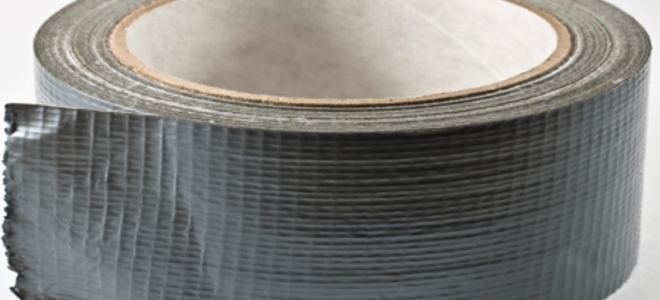
Diana and I had just returned from dinner and a movie. We had left the kids (Gabe 15, Lee 12, Hannah 10, and Zoe 6) at home. We walked in through the front door into a quiet house around 11:30 pm. The kids were obviously asleep. To our left, on the living room couches, Gabe, Lee, and Hannah were crashed out, sound asleep. And to our right, much to our surprise, was tiny Zoe, asleep as well, suspended 3 feet off the floor, literally duct taped to the kitchen door!! Her little head was cocked to the side, little arms spread eagle. She reminded me of a little scarecrow. Diana freaked out and tearfully began extracting her little girl from her duct-taped perch on the door.

The inquisition began immediately. As we soon learned, the kids had the grand idea to play a little joke on their parents. They thought we were going to just dinner, not dinner AND a movie. They anticipated we would be home by 9:30. So around 9:10 they got a full roll of duct tape and used the entire roll to tape and suspend their little sister to the kitchen door. Having finished, the older kids retreated to the couches to feign sleep in great anticipation of their parents’ reactions. Little Zoe feigned sleep as well. She was 100% complicit.

Soon, feigned sleep transitioned to real sleep for the four pranksters. And two hours later, we arrived home.

I thought it was innovative, original, and hugely funny.  Diana . . . not so much.

I am Spartacus!

My name is unusual. Years ago, there were 3 “Lowell Sensintaffars”—me, my grandfather, and a distant cousin. My grandfather and distant cousin have passed away, so now I’m the only one—the only Lowell Sensintaffar on the face of this earth.

And this uniqueness presents its own challenges

For example, the ritual of spelling my last name over the phone:

“S” as in “Sam,”

“ E, N,”

“S” as in “Sam,”  

“I, N,”

“T” as in “Tom,”

“A,”

“F-F” as in “Frank-Frank,”

 “A, R.”

I must hear our clinic staff spell this out for patients, other doctors, and insurance companies over the phone at least a bazillion times every day. God bless them for their patience.

And then there is the whole restaurant thing . .  .

“What’s the name on this reservation?”

“Lowell Sensintaffar.”

“Huh? What??? How do you spell that?”

The “deer in the headlights” look happens just about every time, whether I use my first or last name. It wears on you.

Not too long ago, I decided to take a positive, albeit unorthodox, step. We were at Pappy’s, one of our favorite BBQ restaurants in St. Louis. I placed our order at the counter.

“What’s the name on this order?” the young man asked.

“Spartacus,” I proclaimed.

“Really? That is your name?”

“No, that’s not my real name but it’ll do, don’t you think?”

The young man was enthused. “That’s awesome! Tell ya what, when I call out Spartacus, if more than one person stands up and shouts ‘I am Spartacus!’ your dinner is on the house.”

20 minutes later, the young man walked out into the crowded dining room and shouted out, “I have an order for Spartacus! Who is Spartacus?”

I promptly stood up, raised my right fist in the air and loudly proclaimed, “I AM SPARTACUS!”

The dining room became silent, patrons looking at me incredulously. I was the only one standing. No free meal. Why in the world didn’t I prep someone to stand with me? Short-sighted, I guess.

Spartacus is still my pseudonym of choice at fine restaurants everywhere.

Luxury Cars, Gynecology, and Casual Conversation

We medical folks can be a strange group. I’ll admit it. Doctors and nurses discuss sensitive and delicate matters among ourselves with the same comfort others do sharing a recipe or discussing a recent sporting event. It is just the way we are. Here’s an example:

Many years ago, I was at an Air Force Medical Group promotion party and I ran into one of the medical group’s GYN nurse practitioners. I will call her Linda for our purposes here. We had a mutual patient, a young woman with a terrible affliction—vulvodynia, chronic pain of the female genitalia (vulva). When I saw Linda at the party, I pulled her aside privately to discuss our mutual patient’s care. We discussed her case for a few minutes and Linda excused herself to get a drink at the bar. Another gal, one of our nurses, came up and asked:

“So, what were you and Linda talking about?”

“Oh, not much really,” I jokingly replied. “Just vulvas.”

“Oh! Does Linda have one?” she asked.

Choking on my soft drink, I stammered a bit–“Ahem . . .  I don’t have personal knowledge of that, but I am certain she does.”

“Hmmm,” pondered the nurse. “That’s weird.  I thought for sure she had a BMW.”

True story.

Technical Difficulties

In August of 1982 I was a sophomore at the University of Missouri-Rolla. I received my work-study assignment letter. I was assigned to work at KUMR, the public radio affiliate at the university. I initially just pulled and filed albums. Over the next three years, I gradually assumed more duties, eventually promoted to a student announcer spinning tapes and LPs and giving the station ID, time, weather, and even the news at the top of the hour. By my senior year, I actually had a Saturday morning classical music program. The program was foisted on me unexpectedly one Saturday morning when the host of the show abruptly quit leaving me with a stack of albums and two hours to fill. I was terrible at it. How do you pronounce Saint-Saëns anyways? And Wagner—I knew the Midwestern pronunciation but that obviously wasn’t good enough. Listeners, including my then girlfriend (now wife), Diana, regularly called in to correct my pronunciations. The classical music show was a short gig. Mercifully for me and my audience, they soon found a replacement.

One of my standard shifts was the Saturday AM shift. I would arrive at 5:30 AM, power up the station, and sign on, 6 AM sharp. One Saturday in the spring of 1984 was a little different. I awakened that morning with the morning sunshine in my eyes (that should not be!). In a panic I turned to the alarm clock. Flashing 12:00. Power failure!! Checking my wristwatch, it was 7:25.

“Crap!  I’m late!”

I rushed off to the station. By 7:55, I signed on, nearly 2 hours late.

I opened the broadcast day with the following disclaimer:

“This is KUMR, Rolla, 88.5 FM, public radio in south-central Missouri. Due to technical difficulties, our broadcast has been delayed. We at KUMR apologize for any inconvenience.”

No one called into complain. Nobody appeared to know or even care. I told my boss that next Monday. Even he did not know (or care apparently) . . .

He laughed, “Oh, that’s OK. Nobody listens to you that time of morning anyways. But your disclaimer . . . technical difficulties?  Really?”

“Well sir, it was due to technical (alarm clock) difficulties . . . technically speaking.”