Pane Cereali!

West along the Mountain Highway toward Polcenigo, there was a little bakery—Panificio Benedet—at the Coltura turnoff, tucked up into the mountain slope. It was one of our favorite places to visit when we were stationed at Aviano Air Base in northern Italy.

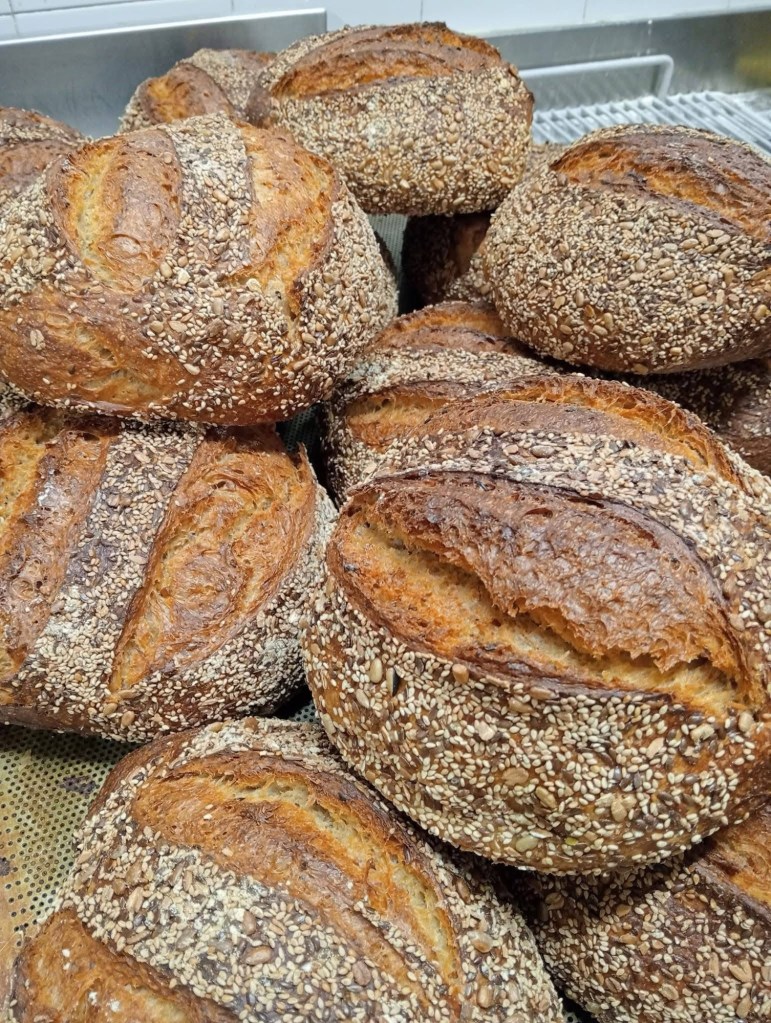
Every Tuesday was cereali day—the day the fornaia (baker and proprietor) baked her outstanding pane integrale ai cereali (whole-wheat multigrain bread), or, as we called it in shorthand, pane cereali (PAH-nay cheh-reh-AH-lee). It was absolutely delicious. I’m not sure what set it apart: the wild yeast native to the mountain slopes? Alpine air? Snowmelt water? Stone-ground local grains? Or maybe just a nonna’s special touch. I don’t know. But it was special—one of those delights you don’t fully appreciate until you can’t have it anymore.

A few years after we moved back to the States, I had some loose ends to tie up in Italy and made a quick trip back. By sheer good fortune, my flight home from Venice to the U.S. was on a Tuesday afternoon. So I stopped by the little bakery as soon as she opened her doors that morning…

“Buongiorno, signora. Pane ai cereali, per favore.”

(Good morning, ma’am. Multigrain bread, please.)

“Quanti pani vuoi?”

(How many loaves would you like?)

“Quanti pani sono?”

(How many loaves do you have?)

“Undici.”

(Eleven.)

“Tutti.”

(All of them.)

“Tutti???”

“Sì.”

Eyes rolling, she exclaimed, “Mamma mia!” She looked at me as if I had just proposed committing some grievous sin or maybe just using Greek olive oil on my pasta— the horror!

“Americani!” 

(Americans!)

Pausing briefly, sizing me up some more, she finally relented and in no time, I was motoring down the autostrada toward Venice Marco Polo Airport in my tiny rented Fiat, two large paper bags stuffed with the finest bread on the planet riding shotgun. 

Boarding the plane, I stashed the loaves in the overhead bin, and the wonderful aroma of yeasted bread and a touch of an alpine Italian Tuesday morning wafted through the cabin. My fellow passengers turned their heads and noses toward the amazing scent in almost cartoon caricature form, in vain hope that the smells portended an upcoming in-flight meal.  I’m not sure whether it was heaven or hell for them. Actually, looking back, it was pretty cruel.

Recently, I’ve picked up a new hobby: sourdough artisan bread baking. And I think I’ve finally captured—if not the exact loaf, then at least the essence—of my favorite Italian fornaia. I may not have mountain air, snowmelt water, or a nonna’s special touch, but somehow the memories come flooding back as I sample my latest creation. The first bite was like a postcard I could taste.

“Mamma mia—and pass the olive oil.”

Jet-lagged Judgment: Spooning in Sin City

In March 1999, I traveled from northern Italy to Las Vegas for a family medicine conference. I was stationed in northern Italy at the time, so this meant long flights over several time zones, and the kind of jet lag where your brain is only half-engaged. 

Being a thrifty military doc, I decided to split a hotel room with a colleague. After all, we were saving taxpayer dollars and it would be a good opportunity to reconnect with an old friend. 

Two queen beds. 

He took the one by the bathroom

I took the one by the window

Simple. Sensible. Foolproof. What could possibly go wrong? 

Well… Later that night, during what my mind and body thought was “some random hour of the night in a nice little villa in northern Italy,” nature called. 

I rolled out of my bed, shuffled to the bathroom, did what needed to be done, and stumbled back out of the bathroom into the dark. 

That’s when my  jet-lagged brain betrayed  me. Somewhere between toilet and bed, my mind foggly decided: 

“I’m home. That lump in the bed by the bathroom… Diana, sleeping soundly.” 

This felt 100% true to my sleepy, time-zone-scrambled brain. So I walked over to “my side” of the bed by the bathroom—my colleague’s bed—lifted the covers, deftly slid in, scooted up beside the warm lump, and settled into a gentle, loving spoon of “Diana.” 

Instantly, the “lump” went vertical. My roommate exploded out of a sound sleep like the Space Shuttle. One second: peaceful REM. The next: full launch. 

He shot upright, eyes wide. I froze. He froze. We are both now very-much wide awake.  Two grown men, nose-to-nose in the dark, scrambling for understanding and clarity. Trying to find the right words… 

I can attest there are really no good words for that moment. At least none that I could find.  It’s a faux pas not easily walked back or recovered from.  

“Sorry, I thought you were Diana” simply did not suffice. 

I clumsily scrambled out of his bed so fast I nearly left my soul behind, tripping over the edge of the mattress, the carpet, and my own dignity on the way back to my bed by the window.   

I apologized. Profusely

He made a few dazed, grumbling  noises that I think meant, “It’s okay, but this will haunt you forever.” 

I lay there on my bed, wide awake, staring at the ceiling, the neon lights of “Sin City” strobing through the hotel window beside me, and me, replaying the dreadful scene on loop.  

I don’t think I slept another wink the rest of the night.  

On the bright side, at least I saved the taxpayers a little money by sharing the room. 

Totally worth it. 

(Okay, maybe not.)

A Patton Critique

“I hated the guy.”  

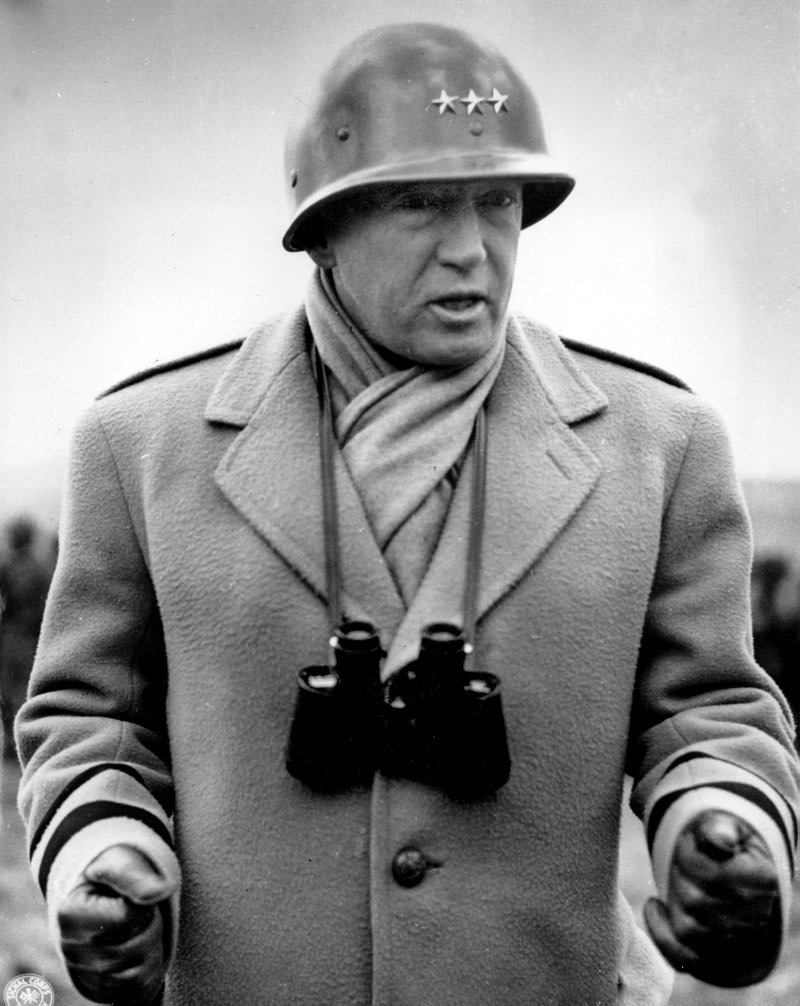
That was the old man’s opinion of General George Patton. My elderly patient was a World War 2 veteran and former captain in Patton’s Third Army. He fought under Patton during the Battle of the Bulge.

”Why?” I asked.

“He just didn’t care too much about the little guy.  It was all about the mission and objective.”

I pressed him further. “Can you give me an example?” 

“Sure. It was during the Battle of the Bulge. Patton had called all of us together for an Officer’s Call.  Several hundred us gathered in front of a flatbed truck and there he [Patton] was, perched atop the flatbed, decked out in his regalia—three stars emblazoned on a shiny helmet, knee-high boots, ivory-handled Colt .45 pistols and a saber. 

“‘Men!’ the General said pointing his saber toward the German line, ‘We are going to cut through that Kraut son-of-a-bitch German line like shit through a goose and I don’t care how many truckloads of Louisiana dogtags it takes!  Do I make myself perfectly clear?!’”

“And that is just one example of many.”

The old man continued, visibly upset . . .  

“They called him ‘Old Blood and Guts’ and he was a gutsy general, no doubt about it. But it was always our blood at stake.  We were an effective army but it came at a very steep price paid with the lives of the common soldier—many of whom were my friends. I really hated the guy for that.”

The old man was misty-eyed. He wiped his eyes, sniffed a bit and was silent for 15 or 20 seconds.

“Oh well, Doc. Sorry about that. I guess we should discuss my high blood pressure and cholesterol.”

And shifting gears, we got on with the business of his doctor appointment.

I May Be Cuter than a Kidney Stone

Mom and Dad were visiting.  It was late on a Friday night.  I heard the loud thud and Dad crying out, “Diane!  Are you OK?”  Hopping out of bed, I rushed down the hallway to the bathroom and found my mom passed out on the bathroom floor.  A quick assessment . . . things seemed OK for now. Vital signs normal. She was coming around. But this episode deserved a little investigation so I made a quick call to the hospital, spoke to an ER colleague, and within a few hours she was admitted for observation.  

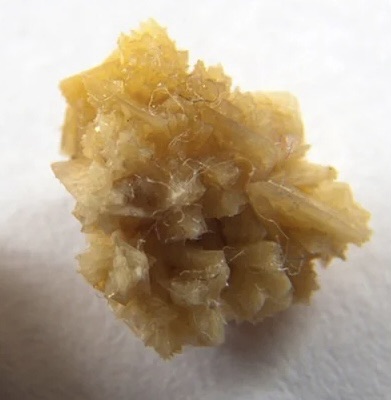
That very next evening, it was my turn. The sudden pain in my right flank was all too familiar.  Another kidney stone! Excruciating pain! Puking! I was miserable!  Again, another call to the same ER colleague as the night prior. A quick trip to the ER and within a few hours I was admitted to the hospital, one floor above Mom. In fact, she was directly below me. The next morning, just prior to a delightful procedure to remove my kidney stone, I was wheeled down to see my mom.  

“Hi, Mom! I thought I would come down to visit.”

“What are you doing in that wheelchair?!! Are you OK?” Mom was surprised and worried like only a mother could be.

I explained to her my predicament and that I had a surgical procedure scheduled that morning to remove the stone.

“Sort of funny, don’t you think Mom?”

“What’s so funny about that?”  She wasn’t amused. 

“Well, this is the second time we’ve been hospitalized together.”

Mom . . . puzzled look.

“The first time, you were the one in labor. Now I’m the one in labor!”

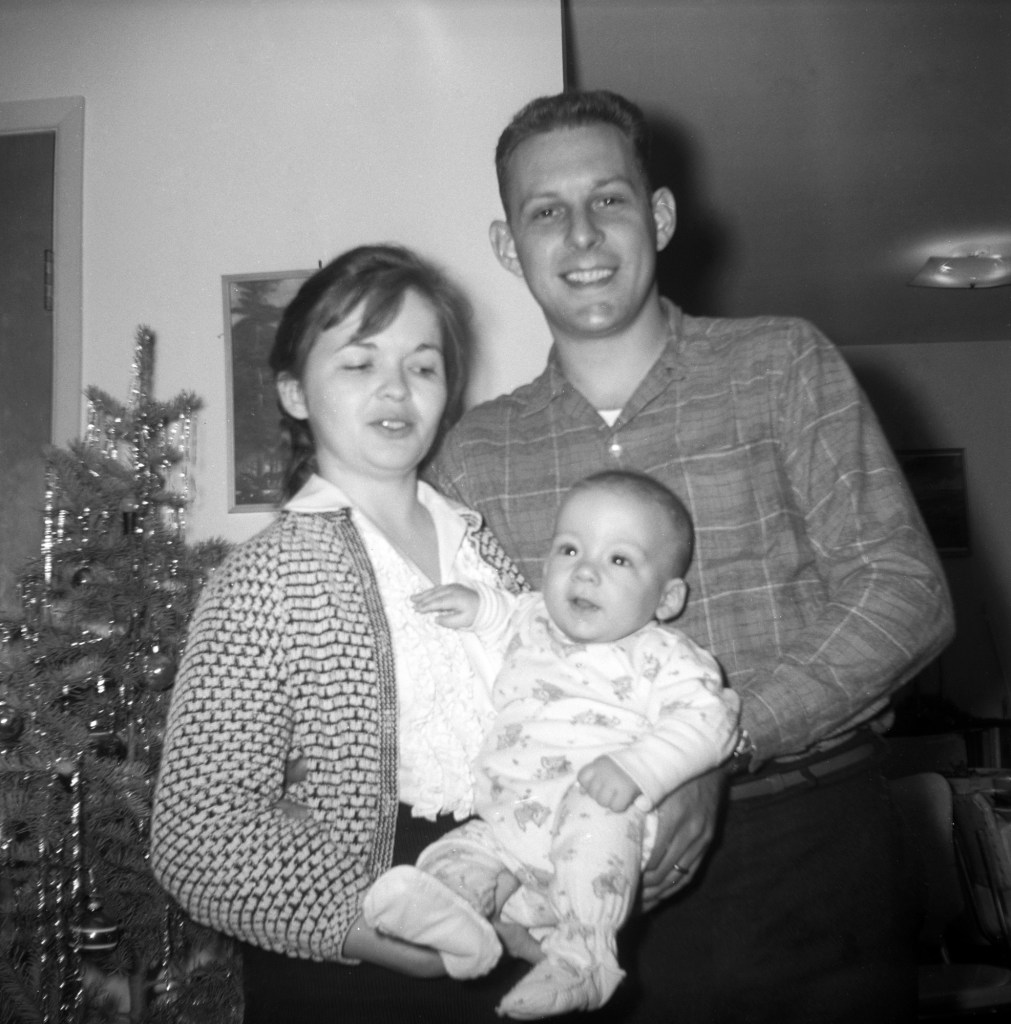
Mom smiled.  “Yes, honey. I guess you’re right. But my baby was way cuter than yours.”

So there you have it. I”m cuter than a kidney stone. 

A Rock from Galilee

There’s a “treasure shelf,” high up and out of reach of little hands. However, it was my moment to shine as Granddad. Maddie (age six) and Levi (age four) were more than happy to help me explore it.

Eager hands and wide eyes examined the treasures: trilobite fossils, a mastodon tooth, the jawbone of a prehistoric bison, Civil War Minié balls, arrowheads, bits of coral, and semiprecious stones—all tantalizing and, importantly, nearly unbreakable.

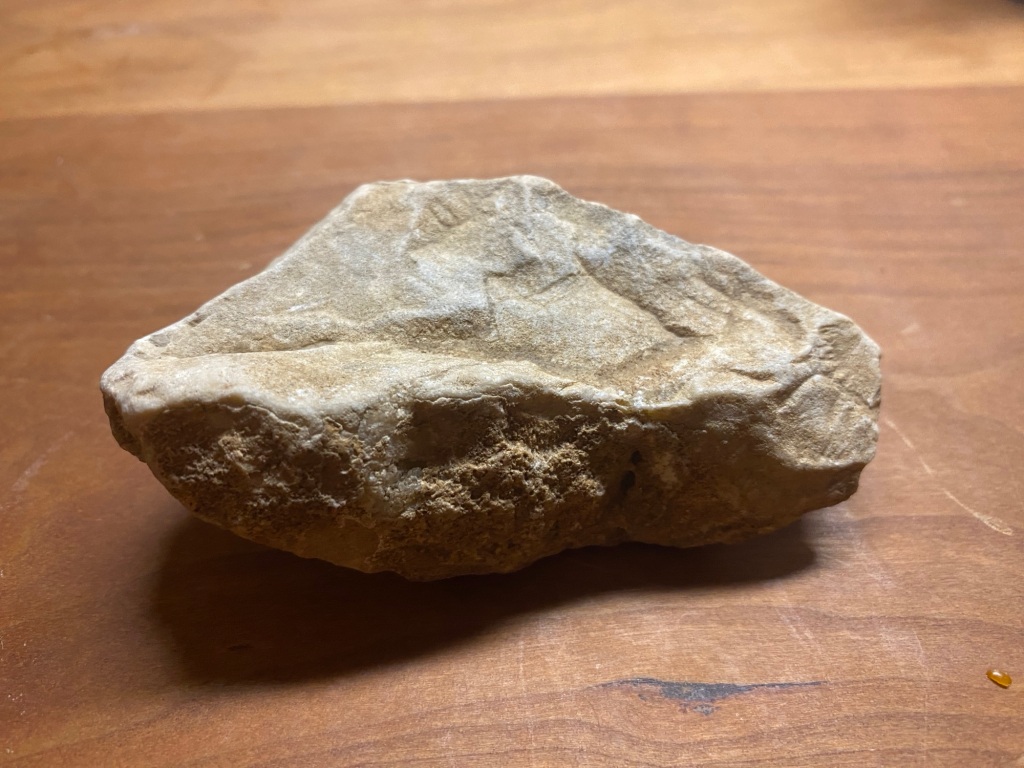
Then out came a nondescript rock.

Brown. Jagged. Plain. Entirely unimpressive.

“What’s that?” Maddie asked, holding the stone at arm’s length, her nose slightly upturned with a skeptical—almost disgusted—expression. Compared to a mastodon tooth, it was clearly a disappointment.

“Well,” I said, “that’s a very special rock.”

“It isn’t very pretty,” she replied.

She was right.

“I found this rock on an ancient trail near the Sea of Galilee in Israel,” I explained. “It’s a path Jesus walked more than 2,000 years ago. He may have stepped on this very rock—or even kicked it!”

Maddie’s eyes widened.

“Wow!” she exclaimed, now cradling the ugly rock like a priceless treasure.

“Cool!” Levi chimed in. “Let me hold it!”

Maddie gazed down at the rock, lifted it to her nose, and took a long, deliberate sniff.

“Oh, Granddad!” she announced with confidence. “This rock smells just like Jesus. He had to have stepped on it!”

Levi sniffed the rock too and nodded solemnly.

“It does smell like Jesus, Granddad.”

Intrigued, I did what any reasonable adult would do.

I sniffed the rock.

I can now say with complete certainty: Jesus smells just like a rock.

“Taste [smell] and see that the Lord is good.” —Psalm 34:8 (NIV, with forgivable license)

Not-So-Random Kindness at the Olive Garden

January 28, 2023

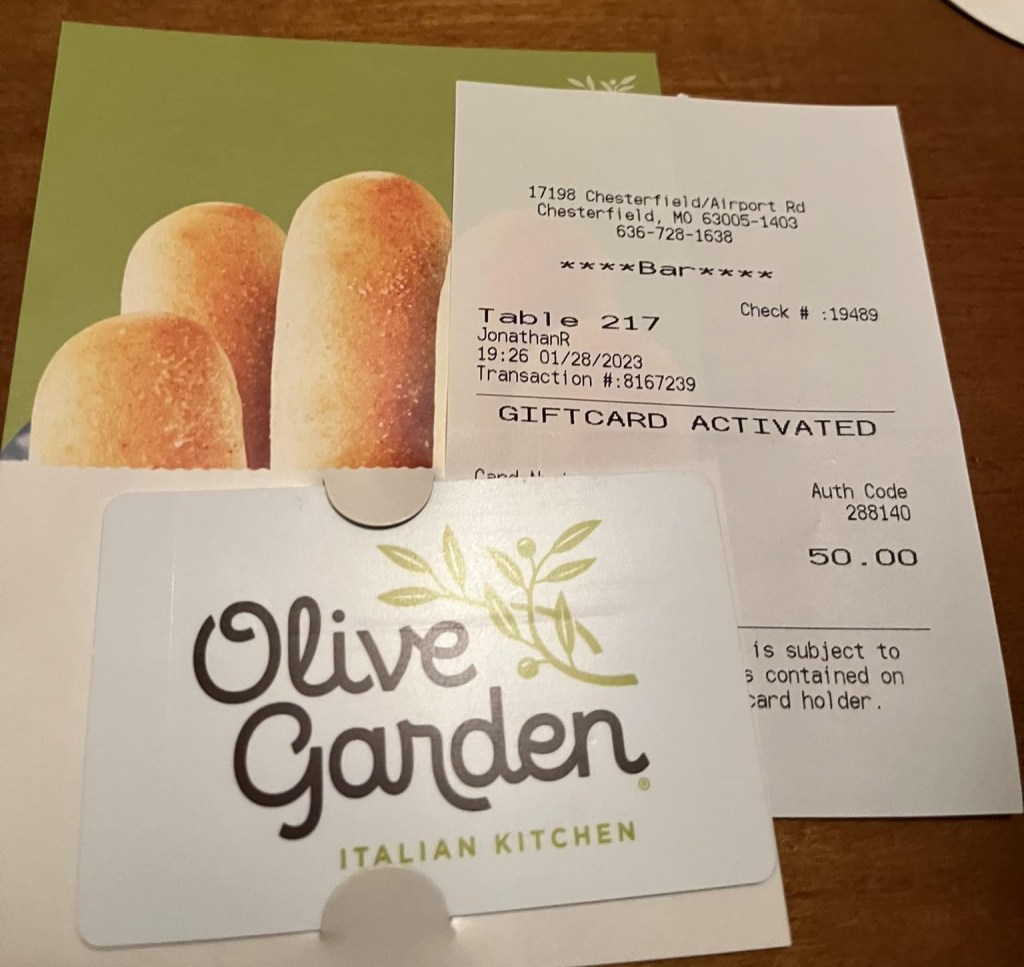
My mother-in-law Judith, Diana,  her sister Donna, and I left the hospital this evening, having said tearful last good-byes to my father-in-law, David Lyon. We were exhausted and emotionally spent.  It didn’t seem right to part ways just yet. Things were too recent–too raw.  I asked Judith if she wanted to go out for dinner and she requested Olive Garden. The restaurant was packed and bustling with patrons–a 45-minute wait for a table.  Not exactly what we needed at the time, but wait, we did. Judith and Donna were standing in the lobby and a middle-aged woman and her 10-year-old daughter offered them their seats in the waiting area. Donna graciously accepted the offer explaining to the woman that her father had passed away a few hours prior.

About 45 minutes later, we’re finally seated at our table and the woman and her daughter who offered their seats approached our table. The woman stood back a bit and the little girl presented Donna with a $50 Olive Garden gift card accompanied by a big hug and condolences.

A random act of kindness? 

Some may say so, but in my opinion, that just doesn’t adequately or accurately describe it. The whole interaction seemed spontaneous, yet so deliberate. God-directed. Purposeful. “In the moment.” Random? No, not really–not at all. Real intentional ministry happened–ministry from strangers to a grieving family–that was obvious. But the other ministry at work was the ministry of a mother to her daughter and that is what impressed me the most. I witnessed a mother instilling in her daughter practical, selfless kindness in a way that will impact that young lady and those she touches in ways we cannot even imagine.

I was inspired.

 Ephesians 4:32 – “Be kind and compassionate to one another, forgiving each other, just as in Christ God forgave you.”

Ichi-go, Ichi-e. A Life Lesson from Mom

I resolved this year not to make any New Year’s resolutions but I made one…just one. I resolved not to make any resolutions. And true to form and true to my history, my one resolution not to make a resolution fell apart very quickly. It toppled to a heap on New Year’s Day.

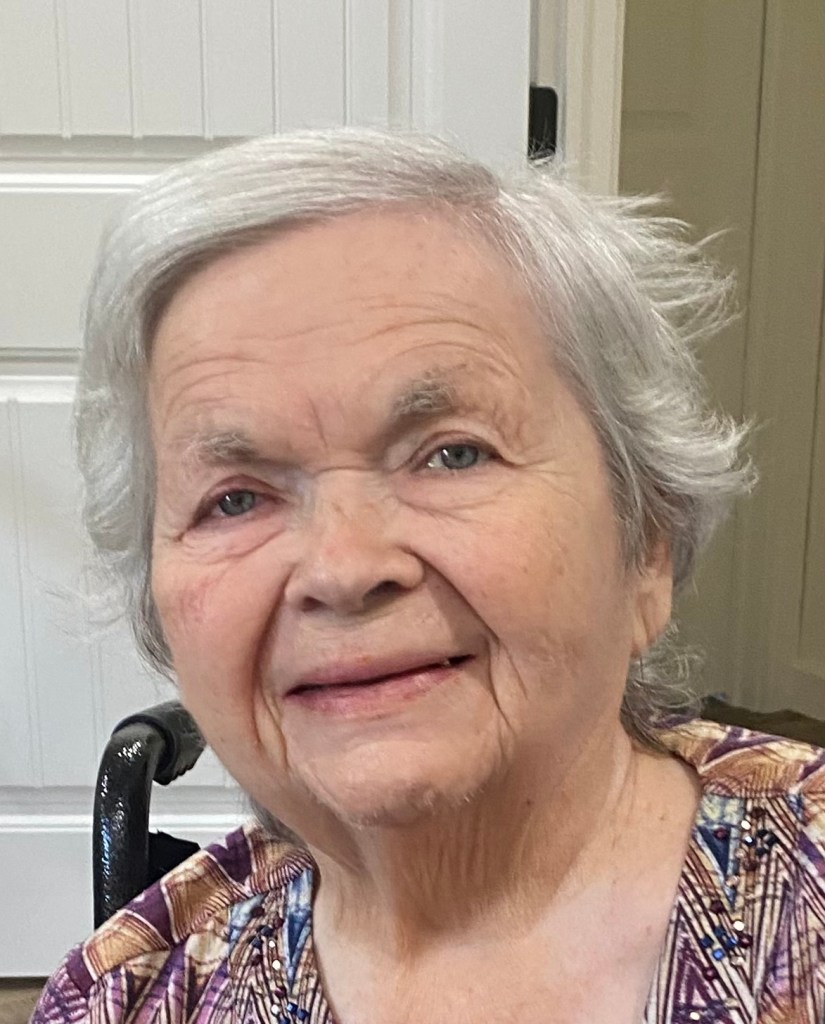
I visited my Mom over the New Year’s weekend. She has advanced dementia and requires round-the-clock care. My dad and I walked into the memory care facility where she lives and Michelle, her caregiver, greeted me with “Do you want a job this afternoon?”  “Uh, sure. What do you need me to do?” I tentatively asked. “Why don’t you feed your mom lunch?” was her demand (it wasn’t a request). 

Mom sat there in her wheelchair. Donning a bib. Blank stare, straight ahead. I gently turned her head toward me. She stared right through me. No look of recognition. No apparent emotion. Just a blank, distant stare. I then proceeded with the slow process of feeding her lunch–a sip of a protein drink, followed by a spoon of pureed soup, then a bit of canned fruit, a drink of water and then back to the protein drink. It was a slow, plodding process. The minutes dragged on. I’m ashamed to admit my mind wandered and I secretly wished my mother would step up the pace a bit. I thought of everything but the beautiful lady sitting right in front of me.

By some miracle, I managed to refocus and reorient myself to the task and person at hand. I studied her intently—The dry crusted food at the corner of her mouth. Hazel eyes. Soft wisps of gray hair across her forehead. Wrinkles and crevasses born of 84 years of living and loving. She was beautiful and I had nearly missed it.  

I lifted a spoonful of pureed soup to her lips and a bit dribbled down her chin. In a reflexive move reminiscent of times when I fed my own children, I scooped up the dribble with the edge of the spoon and brought it back to her mouth.

“Mom!” I called out to her. I gently turned her face toward mine. 

 “Do you remember when you fed me like this?”  

Her gaze slowly went from distant to a vague sense of recognition. She looked into my eyes and there was the hint of an upturned corner of her mouth. The eyes soon responded with a brightness only born of a genuine, heartfelt smile. We connected, mother to son, but for just a moment.

“I love you Mom.”  

“I love you too.” she responded.

I treasure that brief moment; a moment I nearly missed.

On the 3 ½-hour drive home on New Year’s Day, I had ample time to reflect on my visit with Mom. It occurred to me, the most precious moments with her are likely to be fleeting, buried amongst the mundane and those moments need to be recognized, treasured, and celebrated. It also occurred to me, most of life and life’s relationships are like that—special moments and treasures buried in the mundane, repetitive toil of the “every day.” How many of these sacred moments do I miss by not fully engaging?

There’s a Japanese idiom, ichi-go ichi-e, which literally translates “one time, one encounter.”  It can also be translated “once in a lifetime” or “never again.”  The big idea of this idiom is that every interaction in life, no matter how fleeting, routine, repetitive or mundane is, in its own special way, unique, never to be repeated and because of that, it needs to be treasured.

So, my sole New Year’s resolution is a big one.  

Ichi-go, ichi-e as a life discipline, treasuring each moment with friends, family, colleagues, patients, and especially God, fully focused on and treasuring that which is immediately present in front of me.

Thanks Mom for the life lesson.

When the Doctor Becomes the Patient

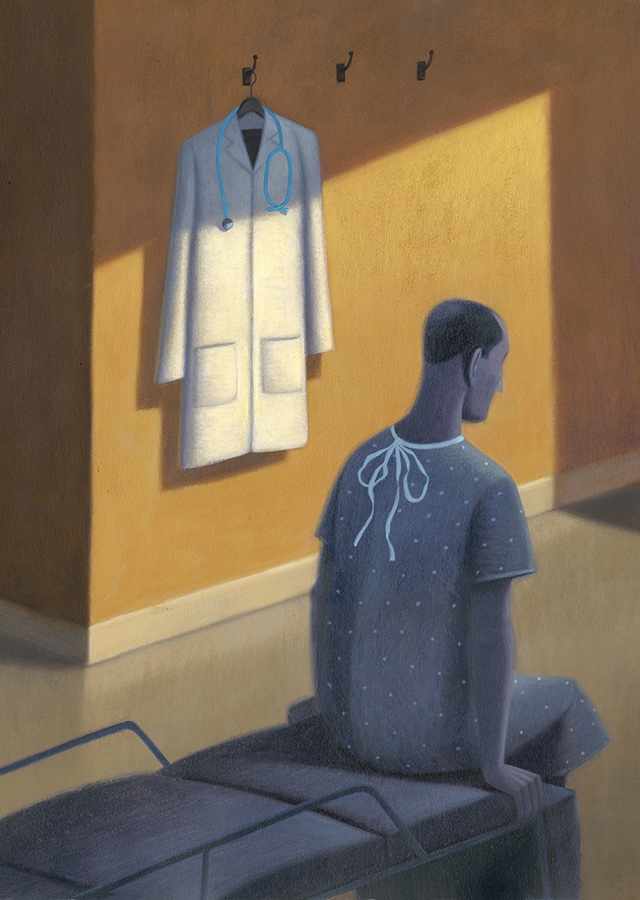
I have trained many family medicine residents and medical students over the past 25 years and every so often, a student or resident would complain to me about the poor conduct or attitude of a patient. There are certainly malevolent patients from time to time but MOST of the time what you simply have is a person who is scared, in pain and/or sick–certainly not at their best–and it is incumbent on the physician (or other healthcare professional) to rise above the rancor, be the professional, and minister healing. We need to cut our patients a little slack. We should realize patients often have serious questions and concerns about their health. They may not feel well. They can be afraid or embarrassed of what sort of privacy-invasive and/or painful exam, procedure or treatment they may be subject to. Being a patient can be a scary and intimidating experience and sometimes we, as physicians, lose sight of this.

Well, I’m telling you, there is no better antidote to this lack of awareness than for the physician to become the patient.

I had that opportunity recently. I’ve had a problem with kidney stones every so often for the past 20+ years and my latest duel with these evil beasts occured recently. The urologist told me he was “dismayed” to learn what was originally thought to be a single 3 mm stone in my right ureter, was actually at least 2 stones, one exceeding 6 mm, jammed back-to-back, like some sort of Beltway traffic jam. Simply taking pain meds, drinking lots of fluids and a daily Flomax wasn’t going to cut it. I needed a little help.

So, there I was–the patient and not the doctor.  

In preop, I put on a backless, drafty gown and an ugly pair of lemon-yellow anti-skid socks–nothing else. Then the IV was placed (3 attempts). Oh yes–I should mention the stirrups (guys get to use them too from time to time). Under general anesthesia, a cystoscopy with retrograde urethrogram, Holmium laser lithotripsy and right stent placement (Google it for details). Lovely post-anesthesia fog in recovery. Peeing blood and “sand” for a week. Cramps, urinary urgency, peeing constantly–dribble here, dribble there. A week later, another cystoscopy and stent removal. And many of the wonderful people taking care of me (doctors, nurses, technicians) were friends and/or patients of mine. But for all the pain, uncertainty, and “exposure,” the outcome was great and I’m extremely grateful for the care I received. I’m sure I was much better informed and aware than the typical patient but it was still a bit intimidating and pretty unpleasant.

So, to my patients: I have been reminded again. I get it.

To my colleagues: take my experience to heart and remember.

And to the American Academy of Family Physicians, the various medical specialty boards and state medical licensing authorities, I earnestly recommend continuing medical education (CME) credits for this.

Some of the best CME ever.

Delivery #1

In the early morning hours of February 18, 1992, I was awakened by a jab in my side. Diana, obviously wide awake, calmly informs me that she’s having regular light contractions 3 minutes apart. As a 3rd year medical student having just finished my OB rotation, I knew just enough OB to realize, for a 4-time, soon-to-be 5-time mom, regular contractions, even light ones, could be a harbinger for a precipitous delivery. So off we went to University Hospital. I started to park in the emergency parking right in front of the emergency room but Diana informed me she wanted to “walk out the contractions” so we parked in the parking garage and started our long trek to labor and delivery. 2/3rds of the way down the hospital corridor, Diana grabs the hallway sidebar, doubles over, and groans. The light contractions were not so light any longer. Grabbing a wheelchair from the ER, I whisk her up to L&D and she’s quickly admitted . Her OB (and one of my OB attendings) pops in from the room down the hall, briefly examines Diana, and turns to me and asks:

“Well, Lowell, are you ready?”

“Uh, yeah. . . I think . . . For what?”

“You know how this is done! Are you ready to deliver your daughter?!”

“Oh. . . Oh! . . . Okay! Yes! Of course! . . . Are you sure?”

“Yes! This is YOUR delivery, Daddy Doctor!”

And stepping forward with trembling hands, a cold sweat, and much anticipation, I clumsily delivered my little girl, Zoe Beth—the very first of hundreds of deliveries I would do over the next 20+ years. It was the first and, by far, the most precious delivery. And now that little one is 29 years old, married, and has two little ones of her own. Wow!! Seems like yesterday. Happy Birthday, Zoe! I’m really proud to be your dad!

Confessions of a Duck

I’ll admit it. I’m a duck.

Not a plain farmyard duck. And not one of those flashy wood ducks, either. A mallard fits me better.

So picture a mallard in your mind’s eye—peaceful, gliding effortlessly across a lake. Calm. Unhurried. But that apparent serenity can be deceptive. Above the surface, all is still. Below it, two webbed feet paddle furiously—hopefully efficiently, hopefully with purpose and direction.

I can be that duck sometimes. Especially lately.

On the outside, I’m collected. Calm. Focused. Steady at the helm for my family, friends, and patients. That composure is a discipline forged over years of military service, medical practice, and—quite frankly—just living. It served me well in combat zones over Iraq. It served me well in clinics, hospital rooms, and delivery suites during countless life-and-death moments. It has served me well as a husband, father, and grandfather.

It’s just who I am—most of the time.

But don’t be fooled.

Beneath the calm exterior, my mind and heart can look very much like those webbed feet—paddling furiously. Anxiety. Worry. A sense of being overwhelmed. All churning beneath the surface.

So what am I to do?

In those moments, I have to remember that my composure, confidence, calm, and steadiness are not products of my own strength—at least, they shouldn’t be. I’m not that strong. Or that big. Or that good.

When life begins to churn, it’s time to refocus on the Strength that has undergirded me all along.

“You will keep in perfect peach those whose minds are steadfast, because they trust in You.” Isaiah 26:3