Dr. Swamp Dweller?

It was the spring of 2000 and I was traveling with my parents on a quick whirlwind tour of Austria, Southern Germany, and Switzerland. We pulled off Autobahn 6, north of Stuttgart to get directions. Snatching a map from a convenience store rack, I quickly scanned for what I needed.

“Exit 40, just 50 km west of here,” I muttered to myself.  Sticking the map back in the rack, too cheap to buy it, I left the store. I had what I needed—directions to Brettach, my ancestral village.

Brettach was the “Sensintaffar” branch’s ancestral village. And it wasn’t always “Sensintaffar.” Over the past three hundred years the surname had taken a few twists and turns. Our distant cousins in Germany were Simpfendörfers and as we drove into Brettach on that Sunday afternoon, they were who we were looking for.

All the shops were closed except for a wine shop. We stepped into the little store and after a few minutes of rudimentary German and charades, our purpose of our visit was communicated and the proprietor made a phone call. Within 20 minutes, Karin, was at the shop and she invited us over to visit her father, Kurt Simpfendörfer, the family patriarch.

Karl was about my dad’s age, an eighth or ninth cousin, best I could tell. And like my dad, he was an amateur genealogist. Excitedly, Kurt invited us into his kitchen. Reaching up to a high shelf, he pulled down a large rolled sheet of paper. Unfurling the paper onto the kitchen table, he revealed his family tree dating back to the 1500s. With Karin translating, he asked us a few clarifying questions and then triumphantly pointed down onto his tree. Looking over his shoulder, I saw my name. I was a terminal branch on his family tree. Enthusiastically, Kurt began peppering me and my dad with questions, updating and verifying portions of his family tree. He extended the branches further with names and birth dates of my children. I was no longer a terminal branch.

After the update, I asked Kurt about the name, “Simpfendörfer.”

“Where did our name come from?  What does it mean?”

He laughs and begins a long explanation (in German).  The only word I understood in his protracted explanation was “Everglades.”

Karin, laughing, prefaces her translation by explaining that her father had only visited the United States once with a trip to Miami and during that trip had visited the Everglades. And she went on . . . “It seems our name used to be Sumpfendörfer.  Dörfer is a person who lives in a dörf or village. And the closest thing dad could describe “Sumpfen” was the Everglades.”

“Oh, so you are saying Sumpfen means “swamp? And Sumpfendörfer quite literally means ‘swamp dweller?’”

“Yes!” said Karin, laughing hysterically.

So when you see a marshy area or your sump pump goes out, think of me.

Turning 18

July 31, 1980, 11:55 PM. I was a short-order cook at A&W Restaurant, Salem, Missouri. Closing time in 5 minutes. A carhop order came in over the speaker:

 “Papa Burger, fries, medium Sprite . . . and one hamburger patty.”

“Hamburger patty?”

“Yeah. Hold the bun. In fact, send it out raw.”

“Raw?”

“Yeah. Come to think of it, why don’t you send it out frozen. I’ll just let it thaw on the dash. It’s for my dog.”

“What size patty? 1/4 pound or 1/8 pound?”

“Big dog. Big patty.”

And so the order (with frozen ¼ lb patty) went out to our last customer just past midnight, August 1, 1980, my 18th birthday.

15 minutes later, as we cleaned the restaurant, the man let himself through the employee entrance. His large German shepherd followed, casing the joint, sniffing every corner. The man proceeded to comment on the restaurant and what he perceived as needed repairs. He then began to regale us with his exploits: prison 4 times; mental hospital, 5. Turning to leave, he handed each of us his business card . . .

“In case you need any construction or repair work done.”

He then called his dog and walked out the door.

45 minutes later, the restaurant was clean and 2 buddies and I decided to cruise town to celebrate my birthday (that is what you did in Salem, Missouri, circa 1980). As we pulled out of the parking place in my parents’ blue 1976 Dodge Aspen station wagon (4 on the floor!), the man with the dog screeched around the corner of the restaurant in his Gran Torino, blocking my exit from the parking lot. His dome light was on. His dog was in the passenger seat. Between him and the dog, perched against the seat–a shotgun. He threw his head back and laughed hysterically–diabolically really. Like a scene straight out of a horror flick. Throwing the car in reverse, I exited the parking lot through another exit. Turning right, with all the screech and horsepower the Aspen could give, I headed downtown toward the courthouse square—a cop usually parked on the corner. The man with dog and gun tailed me closely, bright lights in my mirrors, looming closer and closer. Pressing the accelerator, my speed picked up. He stayed on my tail. Evasive maneuvers to no avail. Approaching the courthouse . . .  Nuts! The cop was nowhere to be found. I doubled back, man/dog/gun in hot pursuit. Finally, in the Walnut Bowl Restaurant parking lot, I saw the cop, pulled up next to his car window and filled the officer in on my little nightmare of an adventure. Meanwhile, the man/dog/gun circled around and pulled up behind the police cruiser. He got out of his Gran Torino and walked up to us. . .

“How old are you son?” asked the man with the German Shepherd and shotgun.  “21?”

“No.”

“When I was 21, I was in the Marine Corps. What are you? 20?”

“No.”

“When I was 20, I was in the Marine Corps.  How old . . .”

Cutting him off, I reply, “I’m 18. Today’s my birthday.”

“When I was 18, I was in the National Guard.”

He then turned to the officer and pulled out a small spiral notebook. Pulling a pencil from his shirt pocket and jotting in the notebook, he began to detail at list my various driving infractions: “50 in a 35 mph zone; wrong way down a one-way street (twice). Ran 3 stop signs.” And the list went on and on.

The officer turned to me quizzically, “Well”?

“Officer, all are true, I’m sure. I’m sorry! But I did those things to get away from him! He did the same and more! He was trying to ram me and run me off the road!”

The officer turned to the man, “Well?”

“I’m practicing,” said the man matter-of-factly.

“Practicing?” inquired the police officer incredulously.

“Practicing.” The man with dog confirmed.  “I’m running for sheriff of Dent County and I’d appreciate your vote.” He then handed me and the cop each one his business cards, got in his car, and drove away into the night with dog and gun.

Cop then turned to me—“Happy birthday, young man. Haven’t you guys had enough fun for one night?”

“Yes sir!”

I dropped my friends off and drove home.

Brikena and the Commandant

Spring, 1999, Aviano Air Base, Italy. NATO bombing of Serbian Forces in Serbia and Kosovo was in full swing.

The front desk called back, “You have an urgent walk-in appointment, doctor.” Gloria Leonarduzzi, a delightful Croatian woman, was checked in, vitals taken. I walked into the exam room and quickly discovered she was not there for herself.

Gloria wasted little time:

“Dr. Sensintaffar, no one needs to take my vital signs. I’m not here for me. I’m here for a baby girl in a Kosovar refugee camp in Slovenia. This baby needs medical attention right away. I think she’ll die if something isn’t done soon. Will you come with me to see this baby?”

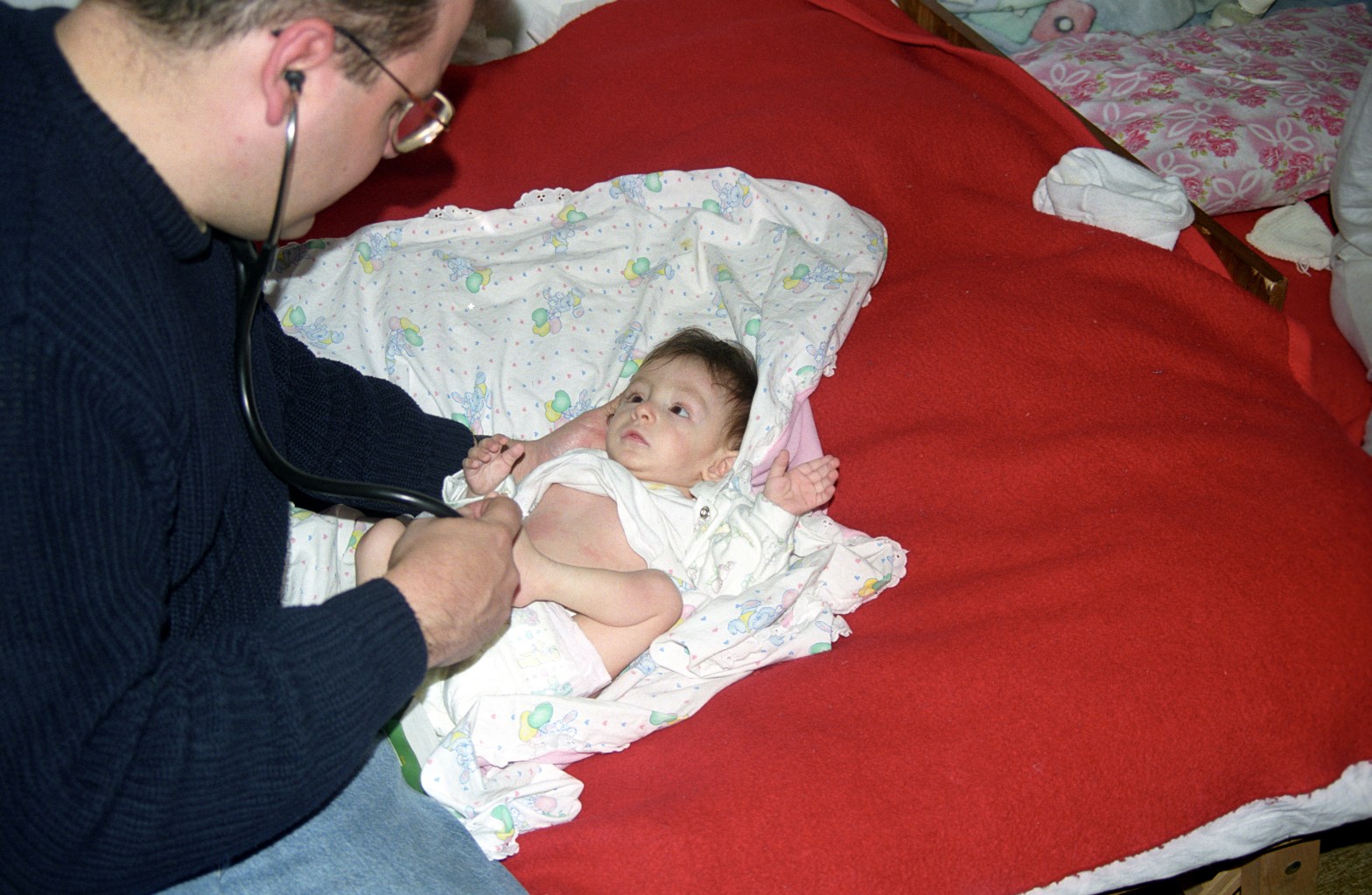
The very next day Gloria and I drove to the camp 2 hours away in western Slovenia. We walked into the dank little room. Luljeta, a 28-year-old Kosovar mother, held her chubby 2-year-old daughter in her arms and motioned toward the mattress on the floor. Laying on a dirty, stained mattress nearly motionless was her other daughter, nine-month-old Brikena. She was emaciated, weighing about 9 pounds. Her breathing was a little labored and faster than normal. Placing a stethoscope on her chest, the problem was obvious. She had a coarse diastolic heart murmur. This child had a significant heart defect.

Soon, Gloria and I were in a cold, gray room with a large wooden table (just imagine Cold War, bare bulbs, cinder block walls, Soviet-style). We were seated in wooden chairs on one side of the table and the camp commandant and his assistant were seated across from us. Gloria translated while I pleaded Brikena’s case. I begged the commandant to allow the baby and her mother to leave the camp to get medical care.

Dismissively waving his hand at us, he scoffed, “No, she is a criminal and cannot leave the camp.”

It seemed her illegal immigrant status had placed her in a unique “no person’s land.” She could not return to Kosovo where a civil war was raging and she could not travel out of the camp for medical care and surgery because of her illegal alien status. So I asked again, and again I was rebuffed. The answer was an emphatic “no!” So frustrated and furious, I stood up, fists on table, leaning forward, I angrily argued my case once again:

“Sir, without surgery this little girl will die and she’ll be just as dead as if Milosevic [the Serbian dictator slaughtering the Kosovars] had put a gun to her head himself! And if she dies without medical care, her blood will be on your hands, not Milosevic’s!”

Gloria looked at me with a questioning look (“Are you sure you want me to translate it like that?”). I nodded my head, she shrugged, and translated.

The commandant became red-faced and started yelling at me and Gloria (what exactly, I had no idea, but he was upset). Then things took an unexpected turn. His assistant started yelling back at her superior and a very contentious exchange of words ensued between the two. Gloria whispered in my ear- “His secretary is his wife!” Seemed she was a mother as well. And as things usually go in marital disagreement, the wife won the day and we got our green light.

Brikena did see a pediatric cardiologist, and with the help of the Slovenian Red Cross and Gloria’s tireless efforts, she did eventually have surgery several weeks later at a hospital in Ljubljana, Slovenia’s capital city. As fate would have it, the commandant had surgery for prostate cancer at the same hospital, at around the same time. He and his wife visited the little girl regularly while the commandant and Brikena were both recovering. The commandant tearfully said he felt like “Dedek” to the little girl.

“Dedek” is Slovene for “Grandpa.”

Last I saw Brikena, she was an engaging, smiling baby girl with a few fat folds on her thighs. Her father, presumed dead in the genocide, did show up months later. The family eventually returned to Kososvo. If she survived the conflict, she would be about 19 years old now.

Brikena, if you read this, IM me on Facebook.

From Airman Magazine, October 1999: Gloria’s Gift 

https://catalog.archives.gov/id/6521197

Sixth Place can be Awesome.

It was the spring of 1993. My daughter, Hannah, stood on the starting block. She was five years old—one of the youngest and tiniest members of the Bluewater Bay Barracudas, a community swim team in Niceville, Florida.

She was racing her very first event: the 25-meter freestyle—one full length of the pool.

Hannah was in lane six, the slowest lane of the slowest heat in the 8-and-under girls’ freestyle. The girls in lanes one through five were easily a head taller and a year or two older. Her blue one-piece swimsuit hung loosely on her small frame, at least a size too big. A blue swim cap was pulled low over her ears.

The gun sounded.

Bang!

She plopped into the water with a splash and something resembling a forward dive, then began stroking as hard as she could. I walked along the pool deck, cheering her on.

By the time Hannah reached the backstroke flags, her competitors were already climbing out of the pool. As she stroked the final meters, the crowd erupted in cheers. By then, she had the pool entirely to herself.

She tagged the wall, and I reached down to pull her up onto the deck, congratulating her on finishing her first race. The cheering continued.

“Did I win, Daddy? Did I win?” she asked, wiping water from her eyes with a towel.

“No, honey, you didn’t win—but you did come in sixth place.”

Hannah began to celebrate.

“I came in sixth place! Yay!”

Then, pausing mid-cheer, she looked up at me.

“Daddy, that’s good… right?”

“Oh yes! Hannah, you did great!”

Still celebrating, she suddenly stopped. Her expression shifted as she began to count the buoyed lanes of the pool—small, wet fingers pointing as she mouthed the numbers silently.

“One… two… three… four… five… six.”

Her face moved from joy to concentration, then to dawning realization—and finally to anguish.

“Oh, Daddy,” she said softly. “I lost. I came in last.”

She collapsed into my arms, sobbing.

Holding her wet little self, I whispered, “Yes, Hannah, you came in last—but you did a great job. You swam the entire length of the pool. And in your next race, you’ll do even better.”

And she did.

Guarding Göring

The old man was in my clinic for his first appointment with me.

“Could you please speak up?”  The old man turned his left ear toward me.  “Can’t hear out of the right ear at all.”

“How long have been deaf in your right ear?” I inquired.

“Since 1945. Damn M-1 carbine kept misfiring when I had it slung over my right shoulder,” the old man complained.

“Let’s see, you seem a little young for being in the military in 1945.”

And the old man continued-“I lied about my age. Couldn’t wait to get to the war-stupid teenage glory thing. Spent my 16th birthday in a foxhole during the Battle of the Bulge. Damn cold. Damn scary. But, hey, we all thought we were invincible . . . until we weren’t. Lost a lot of buddies over there.”

“How long were you in the Army?”

“Twenty-six years.  Retired in 1970. Stayed on in Germany after the war. Was a guard at Nuremberg.”

“Really? Can you tell me about that experience?”

And the old man continued-“I was a guard in the prison adjoining the courtroom that tried the Nazis—Göring, Hess, all those guys.”

“Does anything stand out to you?” I pressed.

“Well, the necktie party, of course!”

“Necktie party?”

“You know, the hangings. October 16, 1946. Got what they deserved. Göring dodged his noose. Took a cyanide tablet the night before.”

“Anything else exceptionally memorable?”

The old man became more serious, more pensive.

“Well, I guarded Hermann Göring a few times. Hated the guy, what he did and all. But when we stripped away his uniform, position and power and put him behind bars, he actually became a likable guy. Funny. Smart. Congenial. Under different circumstances, I guess we could’ve been friends. I genuinely liked the guy. Not proud of it but it is the truth. It is hard, even now, to get my head around both the news reel Göring and the prisoner Göring. It haunts me to this day. To think I could have actually liked that sort of man. Such an evil, evil guy.”

The Warrior and the Prayer Warrior

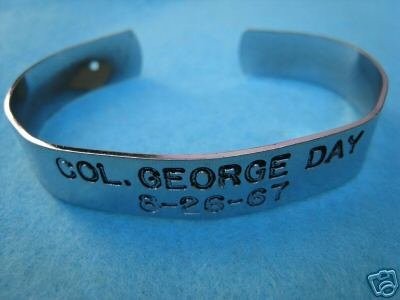
My wife, Diana, had prayed for him for years. He was just a name on a bracelet-

COL. GEORGE DAY, 8-26-67

She was given the POW bracelet in junior-high school in the early 70’s. She wore the bracelet and prayed faithfully for his safety, health, and safe return for years. In college, she lost the bracelet during a dorm move but she still continued to pray for Colonel Day.

Years later, in 1996,  Diana and I were married and I was a third-year family medicine resident at Eglin Air Force Base, Florida. One weekend, we were at the Air Force Armament Museum at Eglin Air Force Base. I was checking out a static aircraft display and Diana tearfully called out to me.

“He’s alive! My guy made it! He actually made it! Thank you, God!”

Diana was standing beneath a plaque on the museum’s Wall of Honor. There was a huge grin on her face and tears in her eyes. The plaque above her detailed Colonel George “Bud” Day’s capture on 26 August 1967, his imprisonment in the Hanoi Hilton, his eventual release in March 1973, and his Medal of Honor and Air Force Cross citations. As we later learned, he not only “made it” but he was also a semi-retired attorney and lived near Eglin Air Force Base.

Some months later, we were dining at a restaurant just outside the base. Colonel Day walked in and took a seat at a table across the room. Diana stepped over to his table and tearfully shook the hand of the man on the bracelet, thanking him for his service and sacrifice and thanking God for his safe return.

The warrior and the prayer warrior—it was an awesome sight.

Hiding in Plain Sight

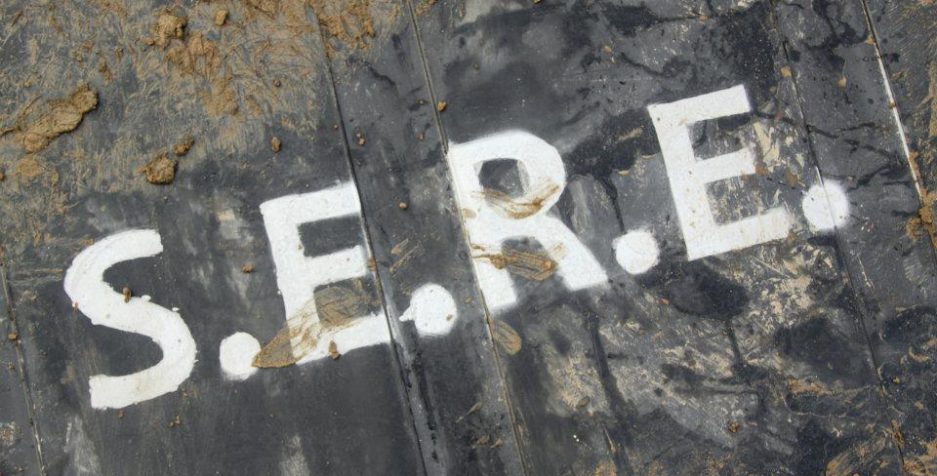
I was at the end of a week of S.E.R.E (Survive, Evade, Resist, Evade) training—better yet, lest I misrepresent, I should call it S.E.R.E.-lite training—it was by no means the intense course given to U.S. military air crews. This was simply a 1-week intro S.E.R.E. course given to 2nd-year Air Force Medical students at a military training area outside of San Antonio, Texas. After a week of instruction, we were ready for the capstone event, an evasion exercise.

It was nightfall and all the students were lined up at the top of a ridge overlooking a large tract of land composed of rock, brush, and gullies. Our objective was to make it to the outbuilding at the opposite side of the exercise area about 1/2 mile away without getting caught by the “enemy.” The “enemy” were our cadre S.E.R.E. instructors. Students who made it to the building without being apprehended were promised pizza. Those who were unsuccessful and apprehended would get the usual MRE. The thought of pizza sounded delicious. The exercise started at 9:00 PM sharp with a whistle blow.

I took a position of hiding just below the ridge and surveyed the small valley below me. Moonlight allowed a good view but did not bode well for us because the “enemy” had the moonlight too. As I watched from my hiding place over the next 15-20 minutes, it became very clear that the cadre (enemy) had done this exercise before. They knew every little crag and crack and there was literally nowhere to hide. My compatriots were being picked off and apprehended at will. No one was getting any farther than 3 or 4 hundred yards without being caught.

So I decided to get creative.

On the ridge behind me was a small service road. The road went along the perimeter of the exercise area and straight up to the outbuilding on the opposite ridge. So I scrambled back to the road and simply stood up and began walking along the road toward the building, not in a hurry, but with feigned purpose. The cadre “enemy” greeted me with waves and hellos as I walked but never challenged me. In short time, I walked through the doors of the little outbuilding and on the table were 5 Dominoes pizzas. The cadre member present informed me the pizzas were only for those students who successfully evaded capture.

“In that case, I’ll have a piece of pizza,” I informed the cadre member.

“But you were captured! Weren’t you? I saw you just walk up here like nothing”

“You just assumed I was captured. I decided to hide in plain sight. I evaded by not acting like I was evading.”

“It sounds like you cheated,” complained the cadre.

“I don’t believe there is such a thing as “cheating” in S.E.R.E., is there? Wasn’t that one of the main points? You do what you have to do to make it, right?”

“You have a point,” admitted the cadre member, “Enjoy your pizza.”

I dined alone that night.

The pizzas were delicious.

Dead Men Walking

The old man tottered into the exam room, deftly placed his cane against the chair and took a seat. It was our first visit together. I was his new doctor.

“Good Morning, Sir!” I greeted him.

He rose to greet me with a firm handshake. In spite his 93 years, his wizened, proud bearing and firm grip betrayed a distant past.

We discussed a few formalities and then I asked him if he had ever served in the military.

“U.S. Army, 1944-1947,” he responded.

“What theater?”

“Pacific. New Guinea, Philippines, and Occupied Japan.”

He went on to tell me his story. A slight kid. 5 foot 2 inches, 120 lbs. He begged to enlist in spite of his 4F status. He was the only military-aged male left in his small rural Virginia town. The embarrassment was too much. He finally convinced a recruiter to turn a blind eye and before he knew it he was slugging it out in New Guinea. Due to his small stature, he became his unit’s “tunnel rat.” His job: descend into enemy tunnels armed with a knife and revolver and clear the tunnel. It was harrowing work.

From there, it was the Philippines with McArthur and more of the same.

“Does one day or moment stand out as the most difficult time for you while you were there?” I asked.

His response was halting and teary eyed as he described awakening in his foxhole in New Guinea one night to see his best friend’s throat slashed right in front of him. His friend had dozed off on watch, only to be overcome by a Japanese infiltrator. After killing his friend, the Japanese soldier leaped upon him. He vividly recalled the glint of Japanese steel covered in his buddy’s blood coming down on top of him. He twisted just enough to evade the full brunt of the knife, quickly dispatching the Japanese soldier with his own knife tucked under his ruck sack. “That was my toughest day.”

“How about your best day?”

A smile broke across his face. “That’s easy. 6 August 1945.”

I thought it would’ve been August 15, VJ day.”

“Well, that was a good day too, but 6 August was my best day. It was the day Truman dropped the bomb on Hiroshima.”

“Why was that day the best day?” I inquired.

The old man’s countenance turned grim. He continued. “We had heard of the carnage on Okinawa. And we are all in the Philippines training and preparing for the invasion of Japan. None of us expected to survive the invasion. We were ‘Dead Men Walking.’ And when we received news of Hiroshima, a glimmer of hope rose up within us that we might, just might, see our families and girlfriends again. We had hope again. We were alive again. It was a really, really good day.”

Workplace Witness 101

cropped-bible-adn-stethoscope.png

“How does your faith inform and influence your practice of medicine? “

That was a question posed to me recently by my pastor, Shane Bishop. My response touched on praying with my patients and a few other overt examples of Christian activity within the clinic. And this was all true and accurate, but I wish I would’ve answered differently. The “overt” of Christian living and witness in the business/workplace environment is important, but it is usually not the most important thing we can do to effectively represent Christ in the workplace.

Allow me to explain:

Answer the following multiple-choice, fill-in-the-blank question:

“My child is gravely ill.  I want the most _______ physician/surgeon I can find to care for her.”

A: Christ-like

B: Competent

You may only choose one attribute.  “All of the above” is not permitted.

Which do you choose?

If you are like most, you will choose B.  Am I correct?

Competence.

Your transmission breaks in your car.  Do you hire the agnostic, profane 45 year-old mechanic with 25 years’ experience fixing transmissions or do you hire the 19-year-old kid who plays bass guitar for the praise band at church and works at Jiffy Lube?  You’ll hire the agnostic every time.

Competence.

Competence trumps overt Christian activity just about every time. And nothing damages and limits a Christian witness in the workplace quicker and more thoroughly than incompetence, sloppiness, and not putting forth one’s best effort, regardless of occupation.  I’ve known a few (thankfully very few) Christian physicians over the years who talked a great Christian talk but did not walk it out very well in terms of endeavoring to provide the very best, patient-centered, up-to-date, evidence-based care available. They were vigorous in their Christian witness but lazy in their practice of medicine. And it certainly compromised their witness among their colleagues and patients.

Several years ago, shortly after moving into our house, I hired a local remodeling contractor, Don Padgett, based on his Christian reputation. But I hired him back the second and third times because his company delivered great service/product at a fair price.  His overt Christian witness got my attention.  His company’s great job/work ethic and a fair price brought me back for a second and third time.

So, if I were asked again how my faith informed and influenced my practice of medicine, I’d respond differently.  My answer would be less about praying with patients and much more about representing Christ by being the very best doctor I can be; by staying up-to-date and relevant in my practice; by endeavoring to be 100% attentive and present when that patient sits in front of me; by being the type of physician I would want my own family to have. A tall order, for sure.

And with those prerequisites satisfied, the other, more overt types of Christian witness, when they do occur, might have more impact.

“Whatever you do, work at it with all your heart, as working for the Lord, not for human masters.” Col 3:23.

My Late Night Chat with Dr. Saunders

February, 1988. 2 AM.

I was working the 11-7 night shift as a mental health technician in an inpatient psychiatric hospital at the Eastern Virginia Medical School in Norfolk, Virginia. The charge nurse handed me a patient chart and asked me to take it to the 4th-floor pre-adolescent inpatient unit and give it to the senior psychiatry resident, Dr. Saunders.

In my mind’s eye, I had an idea what this Dr. Saunders looked like: male, young, white coat. Entering the unit, I looked around and he was nowhere to be found. Asking the unit nurse, she pointed to an activity table in the middle of the common area, “SHE’s over there.” Dr. Saunders sat in a tiny youth chair writing in a chart, her knees uncomfortably flexed to accommodate her frame, the chair, and table. She was much older than I expected. Rumpled clothes. Glasses perched on the tip of her nose. Graying hair pulled back into a bun. She looked exhausted. 

I handed her the patient’s chart and with time to kill, we began to chat. Small talk initially. I discovered she was 62 years old and would finish her psychiatry residency in June. During the course of our 15-minute conversation, I finally asked her the question at the forefront of my mind– how was it that she was just embarking on a new career as a psychiatrist when most of her age-peers were preparing to retire from theirs?

Her story was compelling. She had been a pre-med sophomore co-ed at the University of Virginia after World War 2. Life happened. She met a GI. They were married. She dropped out of school and raised seven children. In her early fifties, she’s divorced and found herself a single woman again. Kids were grown and had their own lives. Grandchildren were a continent away. A big, lonely, empty house. A big, lonely, empty life. No direction. No vision. She sunk into despair.

In the midst of her despair, a friend and confidante asked her: “Is there one thing you wish you would’ve done differently with your life? If there were ‘do-overs,’ what would you change?”

The answer had nagged her for decades. “I wish I would’ve stayed in school and become a physician.”

“Well, why don’t you go to medical school?” inquired the friend.

“By the time I  finish undergrad, med school, and residency, I’ll be in my early 60s!”

“True,” responded the friend. “But how old will you be in 9-10 years if you DON’T do what you’re supposed to do with your life?”

And with that compelling logic, she launched back into her studies and was looking forward to 15-20 years as a psychiatrist, health permitting.

I was 25 years old at the time. Married. 3 young boys and a newborn daughter. Scraping by on a dollar above minimum (late night shift differential), I could barely see meeting next month’s rent, much less pursue my dream–a career in medicine. But somehow, after my short, late-night conversation with Dr. Saunders, the idea of going to medical school did not seem so daunting or crazy. Maybe it wasn’t a pipe dream. I went home that morning after my shift, went to bed, and that evening I cracked open a dusty MCAT study manual. 18 months later I started medical school at the University of Missouri-Columbia.

I tried to track Dr. Saunders down years later to thank her but I was never able to find her. I’m sure she had no idea how pivotal our late night chat was for me.