Gardening Tips for the Wilderness

The monochromatic desolation of the Middle Eastern deserts is something you have to experience to even remotely comprehend. I’ve spent some time in the deserts of Qatar, Egypt, Jordan, and Israel and the total absence of plant life is something almost otherworldly; almost lunar.

In the spring and summer of 2005, I was deployed to Al Udeid Air Base in the desert outside of Doha, Qatar. While there, I really missed the green. In fact, I think we all missed the contrast a plant, tree, even a single leaf could provide. There was literally nothing growing anywhere. Not even a cactus or a sprig of grass. So great was our desire for something green that some enterprising folks actually had their families mail them potting soil and grass seed. They would carefully cultivate a small patch of grass just outside the door of their trailer and grow a “lawn.” We would all water the “lawn” as we walked by with our water bottles. Occasionally, the “lawn owner” would carefully “mow his lawn” with a pair of scissors. While he “mowed,” we would gather around to take in the scent of home, a freshly mowed lawn. It was glorious.
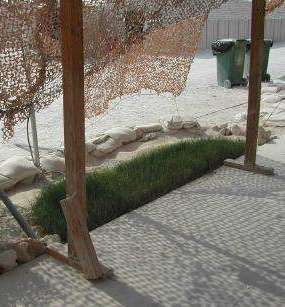
grass2_small-2

An Al Udeid lawn

Aside from the occasional “lawn,” the only other bit of green on the entire base during my time there was a single tiny tomato plant, no doubt a “salad volunteer” that managed to start growing along the sidewalk from the dining hall. We would give the little plant at drink from our water bottles as we went to and from the dining hall. The little guy did well through April and May at 115°F and even sported a tiny solitary yellow bloom. But when the 125-130°F temps of July and August came, the little tomato plant wilted away. I genuinely felt a little pang of grief when my little green friend died. I really liked that tomato plant.

This barrenness is what the Bible refers to as “the wilderness.” The wilderness of the Middle East is not one of endless forests and mountains. When Jesus and Moses went into the wilderness, it was desolation they experienced, not forests. In fact, God defines wilderness in Jeremiah 2:2, as a “land not sown,” barren of plant life.

Sometimes we can feel like we are in a spiritual wilderness. We can feel dry. Our lives can become monochromatic, void of purpose, and barren. I know it happens to me. When that happens, I remind myself the wilderness (my wilderness) is best defined by what it lacks. It is a “land not sown.” It lacks growth and vitality born of a life planting and investing in the lives of others. And sometimes (most times), the best path out of that wilderness is not north, south, east, or west. The best path is to stay put and start planting myself out of my wilderness right where I am. I plant by ceasing to be self-centered and begin reaching out to others, giving of myself, and putting my hands and heart to doing God’s work, right here, right now.  And when I do, I have God’s promise and assurance that those seeds will germinate, spring forth, and life will return and overtake my wilderness.




Of Dads, Step-Dads, and the Example of Joseph. A Christmas Story

In the roster of the cast of the Real Christmas, the A-list lead is, of course, the Baby. While the baby in the manger was God in every sense of the word, He was still—after all—a newborn: helpless and utterly dependent. And so He needed a great supporting cast. This “Save the World” thing was going to be a big deal.

First among that supporting cast were His mother, Mary, and her betrothed—and Jesus’ new stepfather—Joseph. The two were specially chosen to do what they were setting out to do: raise the Son of God. Mary gets a lot of airtime in religious circles, and she deserves it. But I’ve always been partial to Joseph.

Here’s why.

I married Diana in 1985. I was 22 years old. She was a widow with two sons—Jesse, age five, and Gabriel, just 22 months. In an instant, I went from living in a one-room bachelor pad with a guitar to being a husband and stepdad with four mouths to feed. It was harrowing. To say I was just having a simple crisis of confidence would be kind—perhaps even optimistic.

I had no job. No savings. No experience with the “dad thing.” For the first several months of our marriage, I muddled through with waning confidence.

My breakthrough came on a Sunday before our first Christmas together as a new family. The pastor’s sermon topic wasn’t quintessential Christmas fare. It was all about Joseph, Jesus’ stepfather. He spoke of the inadequacies and quiet fears Joseph must have felt when charged with the supreme task of raising the Son of God.

Earthly stepfathers often feel they must “measure up” or “compete” with the living “ex” or with the ghost of a deceased father. Those feelings are usually self-inflicted—but very real nonetheless. Imagine trying to compete with the Creator of the universe.

As the sermon unfolded, the message became clear: God selected Joseph specifically for this grand task and He fully equipped him to do it. And in that moment, I understood something just as clearly. God had selected me to raise these two boys and had equipped me to do it. I was not alone in this grand adventure.

There are epiphanies in one’s life that become central to direction, purpose, and identity. That Sunday sermon was one of mine. That Sunday morning, I graduated from stepdad to Dad.

I don’t believe Joseph introduced Jesus to others as his “stepson.” It was probably more like, “This is my son, Jesus.” And I imagine a toddler Jesus crying out “Abba!” to Joseph after falling and scraping his knee. In our family, the “step-thing” is a term reserved for legal documents. “Dad” will suffice, thank you.

Not too long ago, I received a text—out of the blue—from Gabriel (now 35 years old). No pretext. No introduction. Just four simple words:

“I love you, Dad!”

I cannot overstate how affirming that was.

Benches, Turbans, and Good Conversation

All five living presidents with first ladies were in attendance at George H.W. Bush’s funeral this past week to honor the passing of “one of their own.” Theirs is an exclusive fraternity like few others. It was heartening to see them come together with single purpose. While appearances may be deceiving, they all appeared to genuinely identify with the deceased and grieve his passing and, in doing so, identify with each other. The respite from political turmoil was refreshing. Despite their political differences, the five presidents were all Americans, all men, all husbands, all fathers, and all had suffered loss to some degree on another. They had all served this great nation. They are much more alike than different.  But aren’t we all?

In the summer of 2005 I was deployed to Al Udeid Air Base, Qatar as the chief physician for the U.S. military hospital. I had been asked to escort four female Airmen on a “morale” trip to downtown Doha, the capital city, and soon found myself in a huge five-story shopping mall. My wife, Diana, will certainly attest to the irony of my predicament.  I am not a mall sort of guy. The mall was not unlike what we have here. There were fast food restaurants. Some very familiar. Some exotic and unfamiliar.  All were halal. Most of the shops were ones you would find in any mall in America. There was one striking difference–the fifth floor.

The fifth floor was a women’s-only floor. Guards at the base of the escalators on the fourth floor were armed with semiautomatic carbines to deter the unauthorized gender. I was told women, many donned in hijabs, veils and burqas, would go up the escalator, pass through the doors, shed hijabs, veils and burqas often revealing the latest Paris fashions, and shop unencumbered.  And that left us at the bottom of the escalator—the beleaguered male class.

My four female charges left me, unchaperoned, and went shopping on the forbidden floor.  I, along with a few dozen other men, found a seat in the “men’s waiting area” at the base of the escalator. I sat down on a bench next to a man about 20 years my senior.

The older gentleman wore a white turban and robe. Through broken English (on his part), very broken Farsi (on my part), and some very inventive charades and pantomime, we struck up a conversation. He was from a small district in the suburbs of Tehran, Iran. His wife and 3 teenage and 20-something daughters were there on a shopping trip. He, as he saw it, was there to finance the whole operation. As my four charges and his family shopped, we sat and waited . . . and waited. We spoke lovingly and proudly of our respective families, aspirations for our children and grandchildren, and, of course, whined about the interminable wait.  We shared pictures from our wallets.  We laughed. And we complained about the wait some more and laughed some more. It was male bonding to the core. Geopolitics never entered the conversation. Not once. Just a man talking to a man about the things that matter most. The time passed relatively quickly and soon I was back on chaperone duty.  We shook hands, briefly embraced, and went our separate ways.

Over the years, I’ve thought a lot about that brief visit on the bench at the base of the escalator. Behind and beyond the macrocosm of national and world events, there are people. Just people. Different languages, cultures, religions, and races.  But just people in the end. When the thin veneer of those things that divide us is stripped away, we are really not all that different. Take it from an old guy in a turban on a bench in a mall in Doha.

Joshua

In late 1995, my then-3-year-old daughter, Zoe walked up to Diana, placed her little hand on her mom’s abdomen, and with the solemnity of a Word from Heaven, proclaimed her mommy was going to have a little brother and his name would be Joshua. These were huge words from a typically reserved and nearly nonverbal little girl. We smiled. “How cute and precocious.” But three weeks later and “one week late” the little stick was blue and we were expecting #6. Zoe knew!

3 months later I was in my afternoon clinic. The radiologist called me with Diana’s 20-week ultrasound results. The tone from the radiologist was somber. The news wasn’t good. Our little one had died.

Later that week Diana was taken to the operating room next to Labor and Delivery for a procedure to extract the body of our child from her. I waited in the obstetrics OR men’s dressing room pulling a double vigil, both as husband/father and as physician managing the labor of another woman down the hall. I waited, dressed in blue scrubs, sitting on the bench between the rows of lockers. I ducked out periodically to check the lady on L&D, then back to the OR dressing room bench to wait.

Suddenly the door from the OR burst open. A nurse carried a large clear jar wrapped in blue towels on his way to pathology. The towel slipped off briefly revealing the body of my son–in pieces mostly. I tried to look away but I couldn’t. I wanted to see him.

The door slammed shut leaving me again in the silence of my own thoughts. I buried my head in my hands and I wept. I had never felt so much pain. My pager blared out. The woman in labor was crowning. I washed my face, steeled myself, and headed to L&D. I delivered the baby and then rushed to Recovery to be with Diana.

Joshua Grey Sensintaffar is my son and I’m grateful for the little time I had with him. He has extraordinary value not just because he was loved by his parents but also because, born or pre-born, he was and is God’s child and created in His image. I am so thankful I will see him again.

Joshua, I love you little buddy.

A Long Black Snake in a Paper Sack

The six-foot-long black snake slithered out ahead of me as I ran through a neighboring farmer’s freshly mown hayfield. It was late summer of 1976 and we had recently moved to rural Dent County, Missouri. The fields and woods of the local area were ripe for exploring. Running across the field, I nearly trampled the snake. It startled me at first but I soon realized the snake offered promise to control mice and rats in the barn. So I chased the reptile down and caught it. Grasping the snake behind the head, its long body coiled around my right arm.

The walk home was sort of a long one, especially carrying a big snake, so I walked up to a small farmhouse a short distance from the hayfield. I knocked on the side door to the kitchen. and an old woman, Mrs. Wolf, answered the door.  She was at least 80 years old and a few inches shy of five feet tall.

“My, my young man! What do you have there?”

“Ummm, ah, yeah. Ma’am, I have a snake.”

“I can see that.”

“Ma’am, do you have a paper sack I could put my snake in?”

“Of course! Of course! Come right in.”

I stepped into the old kitchen, snake-in-hand. There was a hand pump at the sink, an old white refrigerator with a round, domed door and chrome pull, a white Formica table with chrome legs and matching chairs. The old woman tottered with the aid of her cane over to the refrigerator, reached down and grabbed a brown paper bag from between the refrigerator and wall. She turned toward me and popped the bag open with a snap of her wrist. Reaching toward me she demanded, “Let me have that thing.” And then the sub-five-foot octogenarian deftly snatched the six-foot-long snake out of my hand quick as a wink, dispatching the serpent with a swish followed by the crunch and curl of the bag. “Here you go, young man!” and she handed the paper bag with snake back to me. Dumbfounded and majorly impressed, I left.

When I got home, Mom met me in the yard.

“What’s in the bag?” she inquired.

“Vegetables from Mrs. Wolf.”

Things went downhill from there.

Double Jeopardy and a Cardiac Defibrillator in Mississippi–a tragic story of friendship and racism.

The old doctor  leaned back in his office chair. His office was full of the trappings of over 50 years of practicing medicine . . . textbooks new and old, a framed diploma from Tulane Medical School (1942) on the wall, patients’ charts stacked up to one side of the desk, no computer, an old stethoscope slung over the chair. He was my attending and mentor for my geriatric medicine rotation during the third year of my family medicine residency. It was 1995. The morning clinic schedule was light and as old men often do when they have nothing better to do, he began to reminisce. . .

“You know, Solomon was one of my best friends growing up. We grew up together in Meridian, Mississippi. I went to the all-white school; he, the all-black school. But the weekends were ours to enjoy. Fishing, playing ball. We were really good friends.

“I went to college and then Tulane for medical school. He was smart too, but he didn’t have the same opportunities I did. He eventually married a girl and made his living milking cows for the town folk. Many families had a milk cow back then. The War took me to the Pacific after a year internship at Charity in New Orleans. When I got home in 1946, I opened a practice. I had lost all contact with Solomon.

“In 1958 or so, Solomon sent a letter to me. He had moved his family to a town across the state some years prior. He had been imprisoned on suspicion of murder. As I learned, Solomon milked a local banker’s cow twice daily. On Friday, he would collect his weekly fee, a few dollars, from the banker’s wife. On that particular Friday, the banker’s wife did not have the exact change and asked if Solomon could come back on Monday for the week’s pay. Solomon readily agreed.

“That weekend, the banker’s wife was found murdered. A blood-stained man’s dress shirt was found at the scene—the husband’s shirt—or at least his size. While the evidence pointed to the husband, a pillar in the community, Solomon was a convenient scapegoat and he was arrested and charged in the murder. They said he killed her for the two dollar fee owed him. You know, the shirt was at least 3 sizes too big for Solomon.

“Right away, I went to Solomon. From his cell, he pleaded with me to secure good legal representation. Trials were quick in those days with his proceedings to begin immediately. The court-appointed attorney clearly was not invested in acquittal or justice. I did finally get him an attorney but not before an all-white jury convicted him and sentenced him to death.

“So the attorney I had secured from him filed a request for appeal and by some miracle it was granted. After weeks of trial prep we felt we had a good case. Then, out-of-the-blue, Solomon summoned me to his cell. ‘Please call off the appeal. I can’t go through with it! Just let them execute me.’ He cried bitterly. After some probing, the reason for the sudden change of heart became clear. The KKK had paid him a visit and threatened to kill his wife and children if he went through with the appeal. There was nothing we could do. Solomon became utterly uncooperative with any appeal. He confessed to the murder.

“The electric chair was the execution tool of choice back then. And with every execution, they needed a doctor to attend the execution to confirm and pronounce death. So I volunteered. Now you may ask, why would I do such a crazy thing?

“There was a new technology available at that time, the cardiac defibrillator. Cutting edge. And I had used the device to shock patients back a few times. I reasoned that if Solomon was executed by shock, I could shock him back to life. And with double-jeopardy (so I reasoned), I could save his life. I know, it was a crazy idea but I was desperate.

“The prison staff asked about the defibrillator I brought. None of them had seen anything like it. I made something up. I lied. But eventually, they figured out what I was up to. The executioner gave poor Solomon a couple extra minutes of electricity just to put any thought of resuscitation out of my mind. I can still remember the smell of his burning flesh. It was so unjust. So wrong. I failed Solomon. I am so sorry. I should’ve done something more.”

The old doctor wept silently in his chair. His nurse stuck her head into the office, looked at both of us quizzically and informed us our next patient was ready. I went to see the next patient and left the old doctor alone with his thoughts and grief.

Nicaraguan Gatorade

In May 1997, Diana and I were on a medical mission trip to Nicaragua. We had arrived with our team to the tiny, hot, dusty town of Waspam in northern Nicaragua just across the Rio Coco from Honduras.

On the evening of the first full day in Waspam, I was in terrific need of a bath or shower. Inquiring, I was directed to a rain barrel at the corner of a neighboring building. The barrel collected rainwater from the roof through a spout. There was a semblance of a shower curtain around the barrel and a tiny tin cup attached by a string to the wall. It was a very tiny cup. I went looking for a bigger cup. At about that time, the generator for the town’s power shut down for the night and all I was left with was the moon and stars for light. Up in our sleeping quarters, I noted a shelf with a line of one-gallon jugs of drinking water we’d brought with us.

“Ummm,” I thought, “With my pocket knife, I could fashion a nice big water dipper out of one of those jugs.”

Grabbing each jug in the dark, it was apparent they were all full of water. Separated by several feet, at the end of the shelf is a lone gallon jug. I grabbed it. “Great, quarter-full! I can use this!” Not to waste the water, I tipped the jug up to my mouth to drink the remaining water. At that very instant, the Nicaraguan moon- and starlight filtered through the contents of my jug. Yellow!! The nasty liquid hit my mouth, lips and the back of my throat. The jug had been used as a makeshift urinal by a member of our team the night before. I leaned over the porch railing and proceeded to relieve myself of dinner, lunch and breakfast. Diana, was beside herself, laughing hysterically. Once I regained my composure, I brushed my teeth (several times). Then I kissed Diana for all her loving support and sympathy–OK, that’s a lie–She would not let me come near her. And then, at last, I had my much-deserved dip bath at the corner rain barrel–using the gallon water jug-turned urinal-turned water dipper. It was refreshing.

For the rest of our trip, the trip leaders pushed hydration–with yellow lemon-lime Gatorade of all things. I simply could not stomach it. Plain (clear) water only for me. I have problems drinking a yellow-colored drink like lemon-lime Gatorade to this day–especially if it is in a plastic gallon jug.

Tulips for Diana

Roses have been an old stand-by for husbands for years. They are the quintessential sign of love and romance. I had fallen back on this tried and true romantic overture for many anniversaries, Valentines’ Days, and birthdays. It was easy. Automatic. And Diana always seemed to appreciate the sentiment.

But then I had to come and mess it all up.

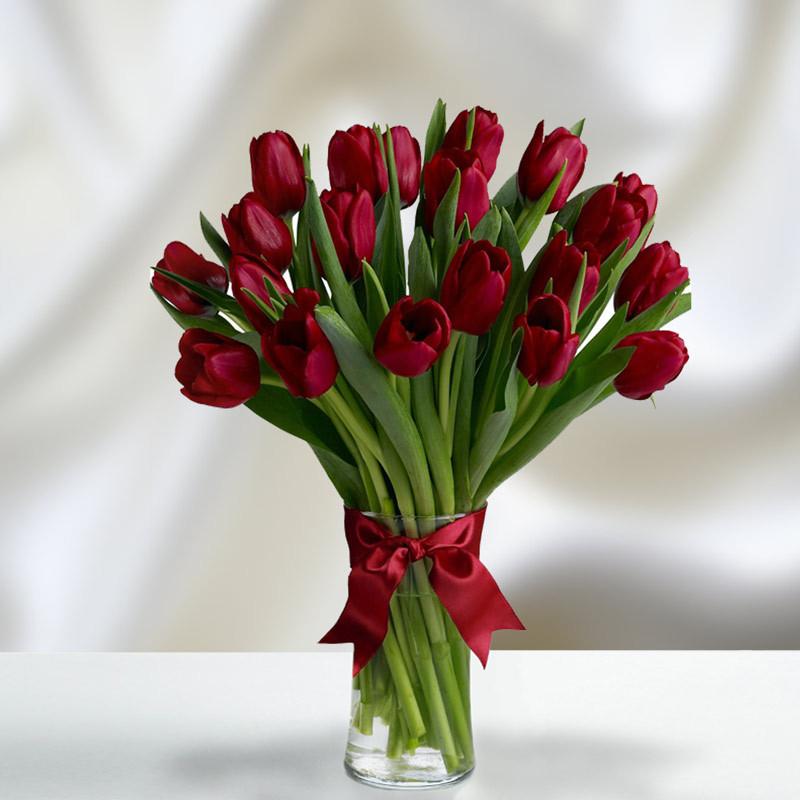
It was June 2005 and I was enjoying an extended 5 month “vacation” in the deserts of Southwest Asia courtesy the U.S. Air Force and taxpayer. Taking a break from my military and medical duties, I set about surprising Diana with roses for our 20th anniversary. I had already sent her an anniversary card a week prior (a birthday card edited for anniversary purposes with a black Sharpie—local resources were limited). This whole routine of me being gone for the important days was all too familiar. It seemed I had missed a good portion of our anniversaries over the prior 10 years.  I felt bad about it and I wanted to make it somewhat right. So I set out to order a dozen roses from ProFlowers.com. Searching the web page of the various arrangements, I set eyes on an arrangement at the bottom of the page. The arrangement of red roses was beautiful. Moreover, there were twenty roses, one of each year of our marriage.  And importantly and inexplicably, it was 15 dollars cheaper than any other comparable arrangement. Bam!  Done deal!  Sold.

On our 20th anniversary, I called Diana.

It was great to hear Diana’s voice. “Oh honey, thank you so much for the flowers!  They’re beautiful!”

“So, you liked the roses?” (fishing for more accolades)

Silence.

“Diana? Are you there? Hello?”

Diana stammers awkwardly. “You didn’t send roses.”

“Of course I did! Twenty red roses!”

“ Honey, the florist must’ve made a mistake. They’re red tulips.”

Thinking almost out loud . . .  “Ahhh, that explains the discounted price.” Checking the email receipt while talking to Diana, it was there—an arrangement of 20 red tulips. I silently chided myself — “What a dummy.”

“I’m so sorry Diana. I meant to send a 20 red roses, one for each year of our marriage.”

“Oh honey!! I love them. They’re so pretty. Thank you so much! I believe I like them more than roses!” As usual, Diana was gracious.

And so a marital tradition was born–crafted out of romantic motives corrupted by cheapskate tendencies. I guess it turned out pretty good.

Diana still loves red tulips.

It is now “our” flower.

The cost savings over the years has been considerable.

A Man who is a Man–A Father’s Day Tribute from my Sons

Several years ago I received a simple CD with “Happy Father’s Day” scrawled across it. On the CD was a 1:52-long song from my sons-Gabe, Lee, and Jesse. Gabe had penned the words and the boys all performed and recorded it for me–a Father’s Day tribute.

Here is the song:

And for older ears that may need a little help deciphering the words (like me), here are the lyrics:

A Man Who is a Man

I wonder how life would be if no one had a father

To tell them how to be and tell them to try harder

And no matter how hard they grind

You’ve got to be stronger


And while you’re young,

He even watches you while you sleep

Just to make sure you never fall

Then he goes to work, 7 days a week

Just to make sure you have it all


A father looks down to his son and says,

“Nothing comes for free

There’s a road that’s straight and narrow

That’s often hard to see

But if you lose your way

You can always count on me.”


And while you’re young,

He even watches you while you sleep

Just to make sure you never fall

Then he goes to work, 7 days a week

Just to make sure you have it all


A man who raises a man

Is a man who is a man

And if he ain’t a man

Then I don’t know who I am.


I love being a dad.


Escort Duty

I called James* late on a Friday afternoon. I had a break in my busy, hectic day as a Pentagon staff officer and wanted to catch up with an old friend. We talked briefly about mutual Air Force-related concerns and the conversation quickly transitioned to the personal. We talked of future plans, wives, kids and family activities for several minutes. Then it was back to the grind.

Two days later, my quiet Sunday afternoon was jarred by a phone call. I was notified James was dead from an apparent suicide—a gunshot to the head.  In disbelief, I argued over the phone . . .

“Are you sure it was James?”

“Surely he must’ve been murdered?”

“Maybe an accident?”

“Why would he do such a thing? We just talked less than 2 days ago and he seemed so normal–so happy. Planning for the future.”

None of it made sense.

Two days later, I was notified I’d been appointed to escort James’ widow, four children, and his remains to McGuire Air Force Base, New Jersey for the funeral and interment. The new widow had made a by-name request for my assistance.

By the end of the week I was at the Dallas-Fort Worth International Airport in my dress blues and waiting for the family. I had already retrieved the remains—a simple wooden box with James’ ashes. I spoke with the American Airlines gate agent. We were all permitted to board first. At the end of our flight to Philadelphia, as the flight taxied up to the jetway, the captain asked everyone remain seated while James’ family and I deplaned. As we exited the plane onto the jetway, the entire aircrew was there—captain, first officer, and flight attendants, all standing at attention, rendering salutes.

The next day was the funeral.

A tri-folded American flag was presented . . .

 “On behalf of the President of the United States, the United States Air Force and a grateful nation, please accept this flag as a symbol of our appreciation for your husband’s honorable and faithful service.”

Three rifle volleys rang out from the honor guard.

Taps were played.

As the last note of taps faded, a four-ship of 2 C-17s and 2 KC-10s lumbered overhead with one of the C-17s suddenly veering upward, towards the heavens, in missing man formation.

I gave a final salute for my good friend and that was it.

I was one of his best friends and I never saw it coming. The “what-ifs” and “should haves” still haunt me.

* pseudonym