The Miracle of Florida Snowflakes on Christmas Day

I graduated from medical school in May of 1993 and moved my family from Missouri to the Florida Panhandle to begin my family medicine residency. We were excited about the move and the new adventure—but no one was more excited than our five-year-old daughter, Hannah.

“Are we in Florida yet?” a small voice squeaked from the back seat.

And so it went for the next few hundred miles.

Eventually we rolled through the tiny border town of Florala, Alabama and crossed into the Sunshine State. After a brief family celebration, a clearly disappointed Hannah piped up again.

“Where’s the beach, Daddy? Where’s Mickey and Minnie?”

Poor thing. Northern Florida looked a lot like southern Alabama—pine trees, red dirt, and gas stations. Nothing like the glossy brochures promising sugar-white beaches or Disney castles. In time, though, Florida redeemed itself. That spring we finally made it to Disney World, and by the end of summer Hannah was an accomplished sandcastle architect.

Seasons passed quickly that first year, and before we knew it, Christmas arrived.

Disney was a distant memory, the surf was far too cold for swimming, and our hearts turned toward home, family, and the familiar. We wouldn’t be able to make it back to Missouri for Christmas. Hannah felt that loss keenly. On Christmas Eve she asked a hopeful question.

“Will it snow tomorrow?”

I tried to let her down gently. “No, honey. It doesn’t snow here. Florida has lots of fun things—warm weather, beaches, and Disney World—but not snow.”

“But I want it to snow on Christmas!” she pleaded. Clearly, beaches and Mickey were no longer sufficient.

Diana smiled and chimed in. “Hannah, it would take a miracle for that to happen. Maybe you could pray for snow.”

I worried she was setting Hannah up for disappointment. My daughter was asking for the improbable—if not the impossible. As her father and supposed spiritual leader, I’d like to say I joined my faith with hers, but I didn’t. I stayed quiet. Hannah and Diana were on their own.

So Hannah prayed.

“Lord Jesus, please let it snow on Christmas. Amen.”

That was it. No bargaining. No qualifiers.

Christmas morning, Hannah burst out the front door shrieking with delight. We rushed outside to see what had caused the commotion. Snowflakes—big, soft, unmistakable snowflakes—floated down from a sunlit sky. Hannah ran back and forth across the yard, mouth wide open, catching them on her tongue.

It lasted maybe twenty minutes. There was no accumulation. The sun kept shining.

But snow, it did.

Hannah was beside herself. “Daddy! Jesus sent us snow for Christmas!”

I stood there dumbfounded, caught between my adult skepticism and the simple, unguarded faith of a child.

“Yes He did, sweetie.”

A Fried Chicken Family Tradition

At family gatherings when I was growing up, my grandfather would whistle while he fried his special chicken. The chicken was superb—crisp and savory and somehow better than it had any right to be. I’m convinced the whistling wasn’t just background noise. It was part of the recipe. Maybe the most important part.

Granddaddy said he learned how to fry the chicken from the owner and chef of a tiny restaurant in southern Louisiana, a place he visited back in the early 1960s. In the dining room a small sign hung over the bar making a boast so bold it begged to be tested:

“If the Colonel had our recipe, he’d be a general.”

Apologies to Colonel Sanders and Kentucky Fried Chicken, but if you tasted the chicken, you would understand the boast wasn’t tongue-in-cheek hyperbole. It was the simple truth.

Granddaddy died in 2001. Years later, on a whim—half nostalgia, half curiosity—I typed that boastful slogan into Google and found it: Chester’s Cypress Inn in Donner, Louisiana (population 126). The restaurant, I learned, was also known for fried frog legs, onion rings, and chicken gizzards—exactly the kind of menu that suggests you’re about to eat something unapologetically unique and maybe even wonderful. I was certain this was the restaurant my grandfather visited.

I told myself someday I’d make a pilgrimage down to southern Louisiana, order the chicken and sit for a spell with the strange sweetness of tasting a precious memory in its unvarnished, original setting. But the days do what days always do: they accumulate; they crowd out “someday,” and then—without warning or asking permission—that “someday” becomes never. The restaurant closed after nearly 80 years of operation.

So now the place is boarded up— gone. The tiny banner of bravado is no longer a sign beckoning patrons in a busy dining room. It’s just a memory now—the fried chicken relegated to a story people tell.

But I still have the recipe.

And I can still whistle.

For those inquiring culinary minds, here it is—the method, the measurements, and the part that matters most.


Granddaddy’s Fried Chicken. (aka “Chester Boudreaux’s Fried Chicken”)

Take the chicken pieces**. Pat them dry and salt and pepper them well. Put 1 cup of flour and 1/2 to 1 teaspoon cayenne pepper (more or less—adjust for taste) into a paper bag. Add the chicken and shake until every piece is fully dressed for the occasion.

Fry in piping hot vegetable oil or lard. As the pieces fry, lightly season with some garlic powder.

Oh—and a few more things.

Whistle a happy tune while you fry. This is most important.

And when your seven-year-old grandson “helps” you fry that chicken, make sure he gets a secret sample before dinner. Then lean in closely and tell him to keep it quiet. Seriously, do it. It’s a tradition.

That’s all there is to it. Enjoy.

** I believe Granddaddy’s skinned chicken version was his late-in-years modification to make it “healthier.” Chester probably did not skin his chicken. Also, both of them would have strongly recommended learning how to properly cut up a whole chicken. They would have considered buying pre-cut pieces—leg quarters, breasts, wings—something akin to sacrilege.


https://www.houmatoday.com/news/20180620/chesters-cypress-inn-to-close-as-restaurant

https://www.myneworleans.com/chicken-at-chesters/

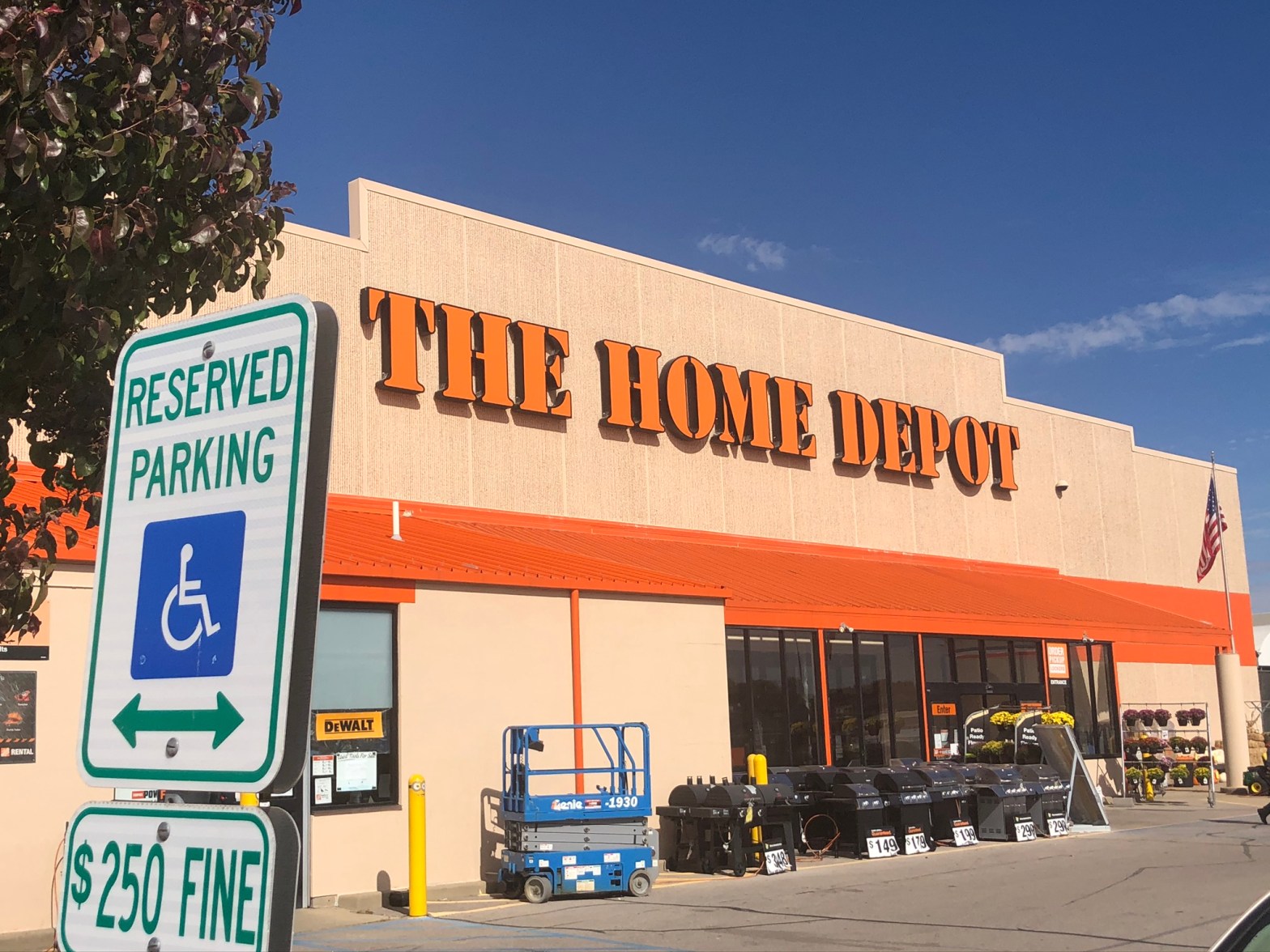
Confrontation at The Home Depot

Diana and I were walking into the Home Depot. A middle-aged woman in a Grand Jeep Cherokee zipped right past us, parked in a handicapped parking space and jogged into the garden section of the store.

I was indignant.

“Just look at that, Diana! Can you believe it!

“Now, now Lowell, just let it go. Don’t say a word.” Diana tried to deescalate the looming confrontation.

“Oh, I have plenty to say! You just wait and see.”

“Please don’t, Lowell! Please don’t!” Diana implored.

I wasn’t deterred.

As we walked into the garden section, Diana, to no avail, tried to reason with me.

I found the lady next to the fertilizer and compost.

“Ahem, ma’am.”

The woman turned toward me. “Yes?”

“Is that your Jeep Grand Cherokee parked out front?”

“Yes, it is. Is something wrong? Did someone hit my Jeep?

“Oh no, ma’am. The Jeep is fine. I was just wondering if you were the person registered against the handicapped tag hanging on the rear-view mirror?

And then it all hit the fan…

“I’ll have you know that you do not have to be missing a leg or in a wheelchair to be handicapped!”

And so the tirade began–yelling, cursing, and screaming.  I looked around for Diana. She probably had to shop for something–anything not garden related. Perhaps drywall?  She was definitely MIA. Poor George in the orange apron at the garden checkout sheepishly turned away–to give us our privacy, I guess.

In the midst of my tongue-thrashing, she began to wheeze and cough. Always the doc, I took a quick assessment. Glancing down, I noticed a sternotomy scar peaking out from between the beet-red heaving cleavage of my verbal assailant—evidence of prior open-heart surgery. I quickly scanned the store for an AED. I thought she was going collapse right there.

The lady did not collapse. And thankfully, neither did I. She eventually stormed off in a wheezy huff.

I went to find Diana. I guess we had drywall to buy.


Dr. Roadkill

January 1992. I was a 3rd-year medical student at the University of Missouri-Columbia. Wife, four kids, one on the way. Lean times? Yes, absolutely.  But also great opportunities for God’s provision.

I was driving down Stadium Blvd at dusk one Friday after a long day at the hospital. The tiny Datsun sedan in front of me slammed into a large deer. I pulled up behind the vehicle. The front end was crushed but fortunately the driver was unharmed. I dragged the dead doe to the side of the road. Shortly, a city cop showed up and took a report.

After taking the report, the cop offered the dead deer to the driver—“I can write you a roadkill tag and you can have it butchered.”

“Oh no! I’m a vegetarian!” exclaimed the distraught college student.

At the ready, I stepped up and generously offered my services—“I’ll take the deer.”

And before you knew it, I had a roadkill-tagged large doe crammed in the trunk of my tiny 1982 Toyota Tercel, head and front hooves sticking macabrely out the back end. I got home that evening and strung the deer up in the tree behind the house and gutted the animal making great use of newly acquired surgical skills. My 4-year old daughter, Hannah, watched with horror from the upstairs window having just enjoyed the movie “Bambi.” “Daddy’s killing Bambi’s mommy!” she cried. The next day I delivered the carcass to the butchers and we ate venison for the next several months.

About a year later, after a night on call in the hospital, I was traveling down the same stretch of road on an early winter morning and there was another large dead deer on the side of the road. I headed home. Diana was still in bed.

“Diana, there’s a dead deer on the side of the road on Stadium.”

“Don’t you even think about it, Lowell!!”

“Oh, I’ve been thinking about it. A lot! It is 10 degrees outside. If that deer is still warm, that deer is mine.”

I collected the deer from the side of the road and took it to the butcher that day. We ate venison until medical school graduation.

Just call me Dr. Roadkill. Others have.

(I do draw the line at opossum, skunk, and armadillo)

God provides.

True story.

A Pork Chop Rebuke

It was a sunny, spring day in 1983. I was  a sophomore at the University of Missouri-Rolla. Walking along the Quadrangle, I happened upon a lanky black man seated on a bench. He was dressed in holey, high-water pants, an off-color, formerly white T-shirt, ratty army fatigues jacket, and well-worn tennis shoes, a few sizes too big, with more than just a few toes showing. At his feet was a rumpled, paper grocery sack. In his lap, an open Bible.

I walked by him and wished him a polite “What’s up?” He was quick and eager to respond. . .

“I’ve been jest sittin’ here and prayin’ ‘n aksin’ the Lawd so send someone by to invite me home fo’ dinna and a showa.” Through the thick drawl, it was clear– He caught me and there was no escape. I agreed.

Robert Taylor was down-on-his-luck, illiterate, homeless. He sat in my sparsely furnished college basement apartment later that day and began to tell me his story:

“The Lawd is a teachin’ me to read and He’s a teachin’ me to write.”

He opened his tattered Bible and began “reading” out loud. Not the words on the page in front of him but rather memorized Scripture from elsewhere in the Bible. He then reached into his rumpled, grocery sack and pulled out a dog-eared spiral notebook. The first page had the child-like printed scrawl of the same repeated sentence over and over again: “I love God.” The next page was the repeated sentence: “God loves I.” The next page: “Africa loves God.” And the next page, “God loves Africa.”  The letters were printed mimicking his Bible’s font—e.g. the a’s and g’s were written to resemble the actual printed font as opposed to typical hand-written letters.

His simple dinner and shower turned into an extended three-week stay. One evening, he was cooking dinner. Pork chops. The chops were sizzling in the pan and Robert was preaching, his bible in one hand, wildly swinging the the grease-coated spatula back and forth with the other. Pointing at me with the greasy utensil, he exclaimed:

“Yo Christians grab yo perty Bible and goes to church. Yo comes home and puts it on da shelf. Yo picks up yo perty Bible and goes to Bible study or Wednesday night church. And yo comes home and puts it on da shelf. And yo does it all da time, ovah and ovah, week after week!”

And with tears streaming down his dark cheeks, he continued, still pointing the greasy spatula at me. . .

“But you know what bugs me? Yo Christians don’t know da Word. And you know what REALLY bugs me? YO can read and YO can write!” He began to cry bitterly,  slumping to his knees, clutching his old tattered Bible.

Sinking into the couch, I felt pretty small.

Conviction.

Robert left without so much as a good bye a few days later.

Shadows and Shade

It was midday in late June in rural Nicaragua and it was brutally hot. Diana and I were there on a medical mission trip. There were no sidewalks in the tiny Nicaraguan village, just a dusty road through the middle of town. I observed the villagers around us. They would take a serpentine route down the road, first on one side, then crossing the street to the other and then back again to the opposite side. The reason for this rambling course quickly became obvious.  Shade.  Large trees towered over the the edges of the street and the villagers walked in such a way to take full advantage of the shade. They walked briskly to a shady area, then slowed the pace down to enjoy the respite from the sun, visit briefly with friends, then walked briskly to the next bit of shade, crossing the road as needed to take full advantage of the shade as they moved down the road.  Diana and I followed their lead. It wasn’t the most direct route but it was the most pleasant.

In a 21st century modern culture with its ubiquitous air conditioned houses, businesses, and vehicles, we may forget the luxury and sweet respite of the shade of trees, shadows cast by rocks and hills, or clouds of an overcast day. But the treasure of shade and shadow was not lost on the desert peoples of the Bible.

Whoever dwells in the shelter of the Most High will rest in the shadow [or shade] of the Almighty.  I will say of the Lord, “He is my refuge and my fortress, my God, in whom I trust.” Psalms 91:1, NIV

When the heat of life takes its relentless toll on us, perhaps we should follow the lead of those Nicaraguan villagers and the admonition of the Psalmist and move quickly to the shade of the Almighty and hang out for a bit. Scripture reminds that this “shade” or respite from the heat of life is always close and available. He met Elijah under the broom tree.  He met Ishmael under a desert bush. And He will meet you where ever you might be. His shade is as close as “your right hand” . . .

The Lord watches over you—the Lord is your shade at your right hand.”  Psalms 121:5 NIV

An Italian Pineapple Surprise (subtitle: Getting Drunk, Baptist-style)

I don’t drink alcohol. I’ve tried beer, wine.  Just never developed a taste for it.  I really wish I could enjoy a glass of wine but I just don’t like the taste. Chocolate milk and sweet ice tea are different matters altogether. “Taste development” for those yummy beverages were immediate.

But in spite of my teetotaler status, I have been drunk. Just once.

It was the summer of 1999. Diana and I were at a going-away party for one of my physician friends.  We were stationed at Aviano Air Base in northern Italy and my friend was transferring back to the States. It was a hot July afternoon and Diana and I were seated at an outside restaurant table. The local American Baptist minister and his wife sat down at our table. She sat next to Diana and the pastor sat next to me.  The wait staff brought out large mason jars of pineapple juice. We were hot and thirsty. The pastor and I had a jar of juice, and then another, and another.

Watching this all transpire, Diana leaned over to the pastor’s wife and asked, “Do they realize the pineapple juice is spiked with vodka?”

“I know my husband doesn’t know,” replied the pastor’s wife.

“Shouldn’t we tell them?” implored Diana.

“Oh, no, no, no, no!” chuckled the pastor’s wife.  “I’ve been waiting to see this for years!”

So Diana and the pastor’s wife sat back, drinking their bottled water, and watched the two of us knock back 3 or 4 big jars of delicious pineapple juice.  It wasn’t until my third jar that a warm wave overtook me that was distinctly different from the heat of the Italian sun.  This was followed by a big boozy belch.  I knew I was hammered.  The hangover the next day was terrible.

So, there you have it. I’ve been drunk once and I had the pleasure of getting drunk with a Baptist preacher.

Now that has to be a singularly unique accomplishment.

A Broccoli Showdown

Zoe sat at the table with her plate in front of her. Arms crossed, she stared down at the plate with disgust at the green thing tucked in between the chicken nuggets and macaroni and cheese.  The single sprig of broccoli was a foreign color. The green clashed with yellows and browns of the other food.  It was a new thing and Zoe did not like new.

So a battle ensued between me and my 4-year-old daughter.

“Come on, Zoe!  At least try the broccoli,” I pleaded.

“No! It is yucky!” grimaced the little girl.

I pleaded with her again. “But you haven’t even tasted it! At least try one little bite.”

“No!” Zoe was adamant.

We had been down this road before. This battle was one I could not win. So I got creative.

“Zoe, how old are you?” I inquired.

“Four and a half, almost five! I turn five next month!!” she boasted.

“Ahhh! I am so sorry for trying to make you eat broccoli, Zoe! I forgot you were only four years old. Everyone knows four-year-olds don’t like broccoli.”

“Really?” said the little one, now fully attentive.

“Yep! It is just a fact. Kids your age don’t like broccoli at all. BUT when you turn five, you will awaken that very morning and you will absolutely love broccoli. I promise!”

“Really Daddy? Five-year-olds like broccoli?”

“That’s right. In fact, they LOVE broccoli! It is just the way things are Zoe!”

So, every day for the next five weeks I talked about the glories of turning five:  Kindergarten. Birthday cake and presents. And, of course, broccoli.

Zoe’s anticipation grew.  “Daddy, I cannot wait to turn five and love broccoli!”

On the special day, there was a birthday cake and ice cream, presents, and a special dinner of chicken nuggets, macaroni and cheese, and, as promised, broccoli.

She scarfed down the broccoli sprig.  “Daddy, you’re right! Five-year-olds do love broccoli!”  She even asked for seconds.

About a year later I thought we would go round two and up the ante.

“Zoe, do you know six-year-olds love ALL vegetables?”

She crossed her arms and scowled. “Daddy, I’m almost six. I don’t believe that stuff anymore!”

Well, at least she still loves broccoli.

The Story of the Little Acrylic Bear

Let me to introduce you to this little guy, a 6-inch bear figurine. He’s been a companion of ours for nearly 34 years. The stories he could tell . . .

On Valentine’s Day, 1985, a skinny 22-year-old college senior plucked the bear off a Hallmark store shelf for $1.99 and bought a single rose. It was a snatch and grab. Not much thought to it. In and out of the store in less than 5 minutes. He then took a young lady for a first Valentine’s Day date to the Red Lobster in Ballwin, Missouri. The skinny guy tipped 20%. He must have been trying to impress her.

On Valentine’s Day, 1986, the little acrylic bear was perched atop a window sill in a two-bedroom apartment in Tulsa, Oklahoma. The bear saw the skinny guy, now married to that same young lady. They are sitting on a second-hand mattress on the floor of the “master bedroom” enjoying their 3 sons: 2 boys from her prior marriage and a newborn. A Valentine’s Day date to Red Lobster? Totally out of the question.

On Valentine’s Day, 1988, the little plastic bear sat on a cardboard box (the dresser, of sorts) in the living room of an apartment in Chesapeake, Virginia. The young lady nursed a newborn daughter. The skinny guy was working. He wasn’t home much—2 jobs and graduate school.

By Valentine’s Day, 1992, the bear had graduated to sitting on a real bedroom dresser in a duplex in Columbia, Missouri. The young lady was rocking, cradling her pregnant abdomen. #5, another daughter, was due any day. The skinny guy was nowhere to be seen—a medical student; on call again. “Valentine’s Day” would wait until the next clinical rotation.

Valentine’s Day, 1998, the bear is nowhere to be seen. He’s packed up in a crate somewhere between Florida and Italy. But he was there in spirit. The household was in disarray. The not-so-young lady and the not-so-skinny guy were very excited about the upcoming move to Italy. A new adventure awaited.

Valentine’s Day 2004, the bear sat on the bedroom dresser in Swansea, Illinois. The formerly young lady wrote the formerly skinny guy an email wishing him a Happy Valentine’s Day. He was deployed and wouldn’t be home for several weeks.

Valentine’s Day 2019: The acrylic bear still occupies a place on the bedroom dresser in Swansea. The formerly young lady enjoys her grandchildren and the formerly skinny guy is working again. But the formerly skinny guy will be home soon to enjoy his formerly young wife.

This little ursine fellow has been there for nearly every Valentine’s Day the lady and guy have had together—34 total. And if he could talk I’m sure he’d remark that this formerly skinny guy and formerly young lady are a good match and very much in love with each other. And he’d be proud that he had a small part in that.

Happy Valentine’s Day Diana! I love you!

A Lesson from Teddy and Peter

In the spring of 1910, former President Theodore Roosevelt was on a whirlwind speaking tour through Europe culminating in Oslo, Norway where he would receive the Nobel Peace Prize for his efforts at brokering the Treaty of Portsmouth that ended the Russo-Japanese War of 1904-1905. In April, he gave a very long speech, Citizenship in a Republic, at the Sorbonne in Paris. The bulk of the speech is largely forgotten but a small excerpt would go down as one of his more famous quotes, popularly known as the “Man in the Arena” speech. This may be my favorite non-biblical quote.

“It is not the critic who counts; not the man who points out how the strong man stumbles, or where the doer of deeds could have done them better. The credit belongs to the man who is actually in the arena, whose face is marred by dust and sweat and blood; who strives valiantly; who errs, who comes short again and again, because there is no effort without error and shortcoming; but who does actually strive to do the deeds; who knows great enthusiasms, the great devotions; who spends himself in a worthy cause; who at the best knows in the end the triumph of high achievement, and who at the worst, if he fails, at least fails while daring greatly, so that his place shall never be with those cold and timid souls who neither know victory nor defeat.”

Teddy must have admired the disciple, Peter. Peter was an “in-the-arena-sort-of-guy.” I have heard many sermons about Peter, critical of his unbelief–first and foremost, his denial of Christ at His crucifixion. But a close second would be criticism of his wavering faith while walking on the water.  I just don’t see Peter in too much of a negative light. In fact, there is plenty to emulate here. This event is a classic “man in the arena” story and easily one of my favorite biblical accounts.

Shortly before dawn Jesus went out to them, walking on the lake. When the disciples saw him walking on the lake, they were terrified. “It’s a ghost,” they said, and cried out in fear.

Jesus immediately said to them: “Take courage! It is I. Don’t be afraid.”

“Lord, if it’s you,” Peter replied, “Tell me to come to you on the water.”

“Come,” he said.

Then Peter got down out of the boat, walked on the water and came toward Jesus. But when he saw the wind, he was afraid and, beginning to sink, cried out, “Lord, save me!” Immediately Jesus reached out his hand and caught him. “You of little faith,” he said, “why did you doubt?” And when they climbed into the boat, the wind died down. Then those who were in the boat worshiped him, saying, “Truly you are the Son of God.”  

Matthew 14:25-33, NIV

Peter doubted and that is certainly a negative. Jesus, after all, rebuked him for it. But Peter did walk on the water. He and Jesus are in a very exclusive fraternity in this regard. And remember, there were eleven disciples who did not make the journey. They were content to watch from the familiar confines of the boat. Peter had, as Teddy would say it, the “great enthusiasm” of walking on the water and would fail while “daring greatly.” He also had the great enthusiasm of being rescued by Jesus’ strong hand. What of the other eleven–those “cold and timid souls” back in the boat? Their collective experience was likely limited to vicarious regrets wishing they had taken that first step beyond the gunwale. The lesson often lost in this story is that in spite of Peter’s shortcomings, it was still better to be a wet-water-walker than a dry-boat-sitter.

It was the juxtaposition of Teddy’s “Man in the Arena” quote with the illumination of Peter’s adventure on the water that helped spur me to action in 1987. I was married, three children with one on the way, and working a low-wage job in Norfolk, Virginia. Aspirations of medical school had diminished, choked by the tyranny of bills, schedules, and my own insecurities (was I good enough, smart enough, to do it?). But after the twin revelations of Teddy and Peter, I reasoned the worse thing that could happen would be failure, and even in failure, Jesus’ strong hand would be there for us. So I studied, took the Medical College Admissions Test, uprooted my family and moved to Missouri to reestablish state residency, and that next year applied to the University Of Missouri-Columbia School Of Medicine. And the rest is, as they say, history.

Thirty years later, my figurative boat has expanded. Uncertain seas of the past have transitioned to the surefooted decks of routine familiarity.  I write this and wonder if I am again “in the boat.”  What new thing  does God want from me that requires taking a step beyond the gunwales of my comfort zone and  natural abilities and onto the figurative water?

Jesus is certainly calling me.

“Come.”