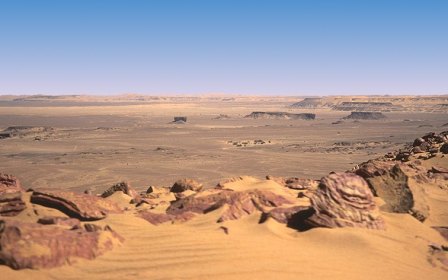
The monochromatic desolation of the Middle Eastern deserts is something you have to experience to even remotely comprehend. I’ve spent some time in the deserts of Qatar, Egypt, Jordan, and Israel and the total absence of plant life is something almost otherworldly; almost lunar.
In the spring and summer of 2005, I was deployed to Al Udeid Air Base in the desert outside of Doha, Qatar. While there, I really missed the green. In fact, I think we all missed the contrast a plant, tree, even a single leaf could provide. There was literally nothing growing anywhere. Not even a cactus or a sprig of grass. So great was our desire for something green that some enterprising folks actually had their families mail them potting soil and grass seed. They would carefully cultivate a small patch of grass just outside the door of their trailer and grow a “lawn.” We would all water the “lawn” as we walked by with our water bottles. Occasionally, the “lawn owner” would carefully “mow his lawn” with a pair of scissors. While he “mowed,” we would gather around to take in the scent of home, a freshly mowed lawn. It was glorious.
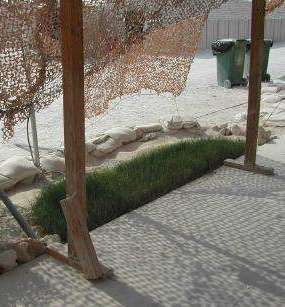
An Al Udeid lawn
Aside from the occasional “lawn,” the only other bit of green on the entire base during my time there was a single tiny tomato plant, no doubt a “salad volunteer” that managed to start growing along the sidewalk from the dining hall. We would give the little plant at drink from our water bottles as we went to and from the dining hall. The little guy did well through April and May at 115°F and even sported a tiny solitary yellow bloom. But when the 125-130°F temps of July and August came, the little tomato plant wilted away. I genuinely felt a little pang of grief when my little green friend died. I really liked that tomato plant.
This barrenness is what the Bible refers to as “the wilderness.” The wilderness of the Middle East is not one of endless forests and mountains. When Jesus and Moses went into the wilderness, it was desolation they experienced, not forests. In fact, God defines wilderness in Jeremiah 2:2, as a “land not sown,” barren of plant life.
Sometimes we can feel like we are in a spiritual wilderness. We can feel dry. Our lives can become monochromatic, void of purpose, and barren. I know it happens to me. When that happens, I remind myself the wilderness (my wilderness) is best defined by what it lacks. It is a “land not sown.” It lacks growth and vitality born of a life planting and investing in the lives of others. And sometimes (most times), the best path out of that wilderness is not north, south, east, or west. The best path is to stay put and start planting myself out of my wilderness right where I am. I plant by ceasing to be self-centered and begin reaching out to others, giving of myself, and putting my hands and heart to doing God’s work, right here, right now. And when I do, I have God’s promise and assurance that those seeds will germinate, spring forth, and life will return and overtake my wilderness.
 Dash Stories