The old doctor leaned back in his office chair. His office was full of the trappings of over 50 years of practicing medicine . . . textbooks new and old, a framed diploma from Tulane Medical School (1942) on the wall, patients’ charts stacked up to one side of the desk, no computer, an old stethoscope slung over the chair. He was my attending and mentor for my geriatric medicine rotation during the third year of my family medicine residency. It was 1995. The morning clinic schedule was light and as old men often do when they have nothing better to do, he began to reminisce. . .
“You know, Solomon was one of my best friends growing up. We grew up together in Meridian, Mississippi. I went to the all-white school; he, the all-black school. But the weekends were ours to enjoy. Fishing, playing ball. We were really good friends.
“I went to college and then Tulane for medical school. He was smart too, but he didn’t have the same opportunities I did. He eventually married a girl and made his living milking cows for the town folk. Many families had a milk cow back then. The War took me to the Pacific after a year internship at Charity in New Orleans. When I got home in 1946, I opened a practice. I had lost all contact with Solomon.
“In 1958 or so, Solomon sent a letter to me. He had moved his family to a town across the state some years prior. He had been imprisoned on suspicion of murder. As I learned, Solomon milked a local banker’s cow twice daily. On Friday, he would collect his weekly fee, a few dollars, from the banker’s wife. On that particular Friday, the banker’s wife did not have the exact change and asked if Solomon could come back on Monday for the week’s pay. Solomon readily agreed.
“That weekend, the banker’s wife was found murdered. A blood-stained man’s dress shirt was found at the scene—the husband’s shirt—or at least his size. While the evidence pointed to the husband, a pillar in the community, Solomon was a convenient scapegoat and he was arrested and charged in the murder. They said he killed her for the two dollar fee owed him. You know, the shirt was at least 3 sizes too big for Solomon.
“Right away, I went to Solomon. From his cell, he pleaded with me to secure good legal representation. Trials were quick in those days with his proceedings to begin immediately. The court-appointed attorney clearly was not invested in acquittal or justice. I did finally get him an attorney but not before an all-white jury convicted him and sentenced him to death.
“So the attorney I had secured from him filed a request for appeal and by some miracle it was granted. After weeks of trial prep we felt we had a good case. Then, out-of-the-blue, Solomon summoned me to his cell. ‘Please call off the appeal. I can’t go through with it! Just let them execute me.’ He cried bitterly. After some probing, the reason for the sudden change of heart became clear. The KKK had paid him a visit and threatened to kill his wife and children if he went through with the appeal. There was nothing we could do. Solomon became utterly uncooperative with any appeal. He confessed to the murder.
“The electric chair was the execution tool of choice back then. And with every execution, they needed a doctor to attend the execution to confirm and pronounce death. So I volunteered. Now you may ask, why would I do such a crazy thing?
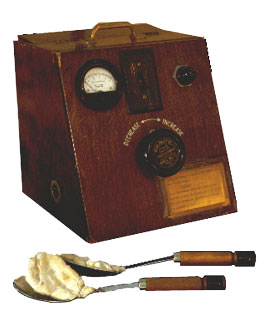
“There was a new technology available at that time, the cardiac defibrillator. Cutting edge. And I had used the device to shock patients back a few times. I reasoned that if Solomon was executed by shock, I could shock him back to life. And with double-jeopardy (so I reasoned), I could save his life. I know, it was a crazy idea but I was desperate.
“The prison staff asked about the defibrillator I brought. None of them had seen anything like it. I made something up. I lied. But eventually, they figured out what I was up to. The executioner gave poor Solomon a couple extra minutes of electricity just to put any thought of resuscitation out of my mind. I can still remember the smell of his burning flesh. It was so unjust. So wrong. I failed Solomon. I am so sorry. I should’ve done something more.”
The old doctor wept silently in his chair. His nurse stuck her head into the office, looked at both of us quizzically and informed us our next patient was ready. I went to see the next patient and left the old doctor alone with his thoughts and grief.
 Dash Stories