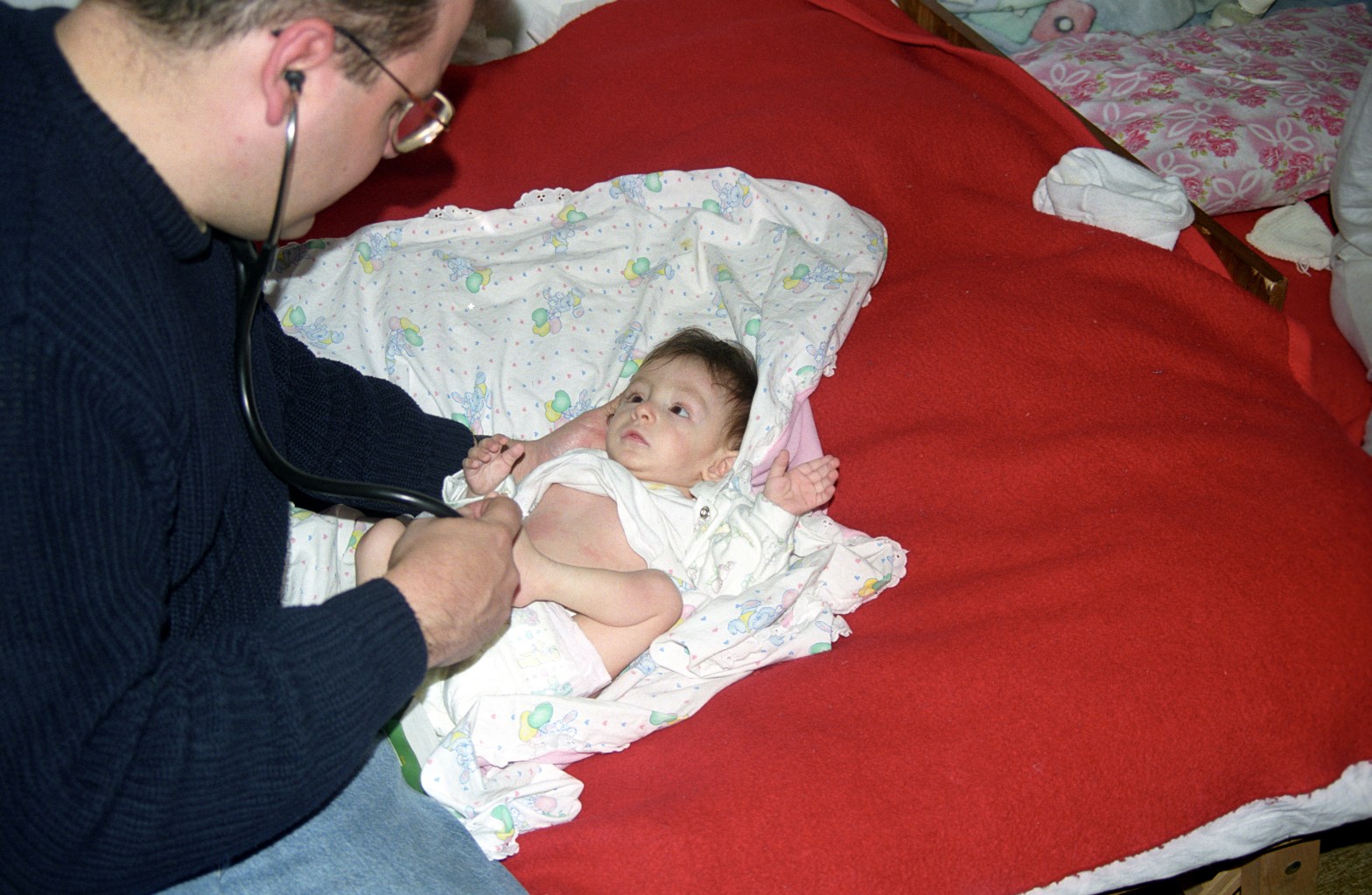
Spring, 1999, Aviano Air Base, Italy. NATO bombing of Serbian Forces in Serbia and Kosovo was in full swing.
The front desk called back, “You have an urgent walk-in appointment, doctor.” Gloria Leonarduzzi, a delightful Croatian woman, was checked in, vitals taken. I walked into the exam room and quickly discovered she was not there for herself.
Gloria wasted little time:
“Dr. Sensintaffar, no one needs to take my vital signs. I’m not here for me. I’m here for a baby girl in a Kosovar refugee camp in Slovenia. This baby needs medical attention right away. I think she’ll die if something isn’t done soon. Will you come with me to see this baby?”
The very next day Gloria and I drove to the camp 2 hours away in western Slovenia. We walked into the dank little room. Luljeta, a 28-year-old Kosovar mother, held her chubby 2-year-old daughter in her arms and motioned toward the mattress on the floor. Laying on a dirty, stained mattress nearly motionless was her other daughter, nine-month-old Brikena. She was emaciated, weighing about 9 pounds. Her breathing was a little labored and faster than normal. Placing a stethoscope on her chest, the problem was obvious. She had a coarse diastolic heart murmur. This child had a significant heart defect.
Soon, Gloria and I were in a cold, gray room with a large wooden table (just imagine Cold War, bare bulbs, cinder block walls, Soviet-style). We were seated in wooden chairs on one side of the table and the camp commandant and his assistant were seated across from us. Gloria translated while I pleaded Brikena’s case. I begged the commandant to allow the baby and her mother to leave the camp to get medical care.
Dismissively waving his hand at us, he scoffed, “No, she is a criminal and cannot leave the camp.”
It seemed her illegal immigrant status had placed her in a unique “no person’s land.” She could not return to Kosovo where a civil war was raging and she could not travel out of the camp for medical care and surgery because of her illegal alien status. So I asked again, and again I was rebuffed. The answer was an emphatic “no!” So frustrated and furious, I stood up, fists on table, leaning forward, I angrily argued my case once again:
“Sir, without surgery this little girl will die and she’ll be just as dead as if Milosevic [the Serbian dictator slaughtering the Kosovars] had put a gun to her head himself! And if she dies without medical care, her blood will be on your hands, not Milosevic’s!”
Gloria looked at me with a questioning look (“Are you sure you want me to translate it like that?”). I nodded my head, she shrugged, and translated.
The commandant became red-faced and started yelling at me and Gloria (what exactly, I had no idea, but he was upset). Then things took an unexpected turn. His assistant started yelling back at her superior and a very contentious exchange of words ensued between the two. Gloria whispered in my ear- “His secretary is his wife!” Seemed she was a mother as well. And as things usually go in marital disagreement, the wife won the day and we got our green light.
Brikena did see a pediatric cardiologist, and with the help of the Slovenian Red Cross and Gloria’s tireless efforts, she did eventually have surgery several weeks later at a hospital in Ljubljana, Slovenia’s capital city. As fate would have it, the commandant had surgery for prostate cancer at the same hospital, at around the same time. He and his wife visited the little girl regularly while the commandant and Brikena were both recovering. The commandant tearfully said he felt like “Dedek” to the little girl.
“Dedek” is Slovene for “Grandpa.”
Last I saw Brikena, she was an engaging, smiling baby girl with a few fat folds on her thighs. Her father, presumed dead in the genocide, did show up months later. The family eventually returned to Kososvo. If she survived the conflict, she would be about 19 years old now.
Brikena, if you read this, IM me on Facebook.
From Airman Magazine, October 1999: Gloria’s Gift
 Dash Stories